Estimated reading time: 6 minutes
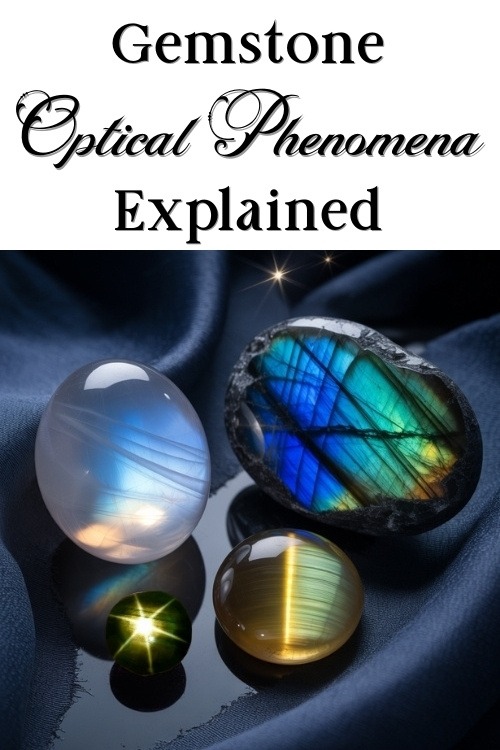
Gemstones are fascinating not just for their color or clarity, but for the visual effects that make them seem almost alive. These effects, called optical phenomena, are natural tricks of light created by the internal structure of the stone. They can produce flashes, glows, stars, or shifting colors that seem to move as the gem is rotated. For jewelers and gem enthusiasts, understanding these phenomena is more than just a curiosity. It’s a way to identify, value, and appreciate the hidden life of a gemstone.
Jump to:
Adularescence
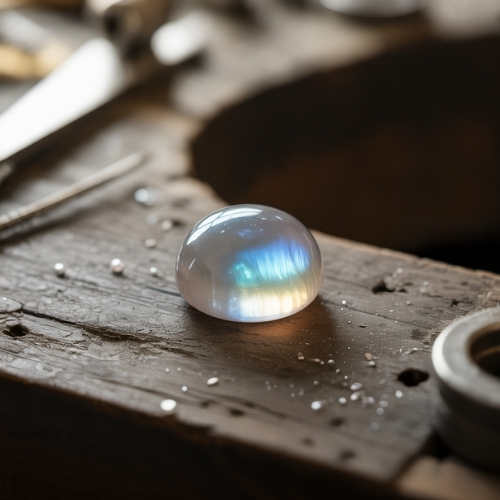
Adularescence is the milky or bluish sheen that appears to float just beneath the surface of a gemstone.
Moonstone is the classic example, where a soft glow seems to drift across the gem as it moves. This effect occurs due to the layering of orthoclase and albite feldspar crystals. Light scatters as it passes through these thin layers, producing the shimmer that looks like moonlight dancing inside the stone.
Asterism
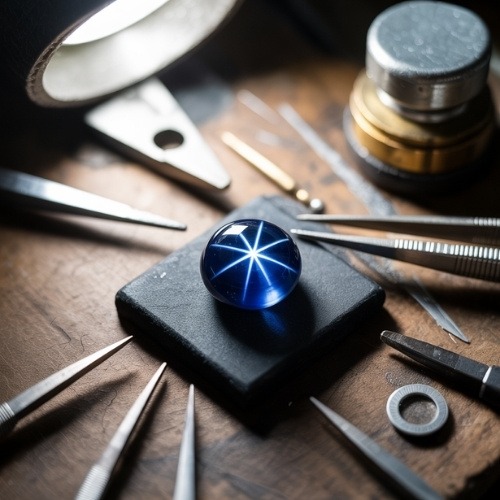
Asterism is the star-like pattern that can appear on the surface of cabochon-cut gemstones.
Most commonly seen in sapphires and rubies, it can also occur in garnets and spinels. The effect is caused by fine, needle-like inclusions of minerals such as rutile, aligned in specific directions within the crystal. When light hits the gem, these inclusions reflect it in a symmetrical pattern. This produces a sharp, moving star of four, six, or twelve rays.
Asterism adds rarity and visual drama, making these gems highly prized for collectors and designers.
Chatoyancy (Cat’s Eye Effect)
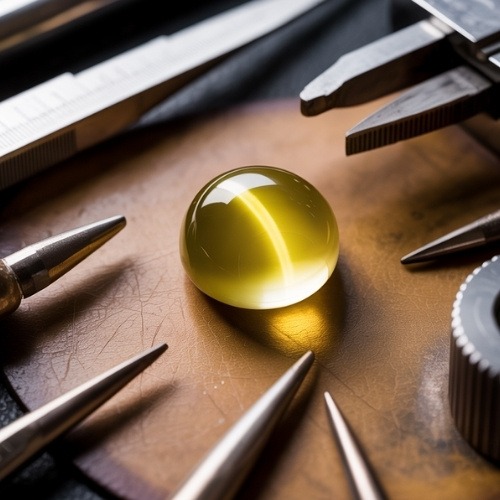
Chatoyancy, also called the Cat’s Eye effect, produces a single bright line of light across the gem, reminiscent of a feline’s eye.
Chrysoberyl is the most famous example, though chatoyancy can also appear in many gem types including tourmaline, opal, and quartz. This effect is caused by dense, parallel inclusions or fibrous structures inside the stone. When the gem is cut into a cabochon, light reflects off these inclusions to create a sharp, moving line.
Within the gem trade, if a stone is described simply as a “cat’s eye” with no gem type, it should be a Chrysoberyl. Other chatoyant stones should be described by type, such as “cat’s eye tourmaline”. In practice, this convention is not always followed. Many sellers are unaware of the rule, while others choose to ignore it. This means it’s common to see other gem types or imitations listed simply as cat’s eye.
Iridescence
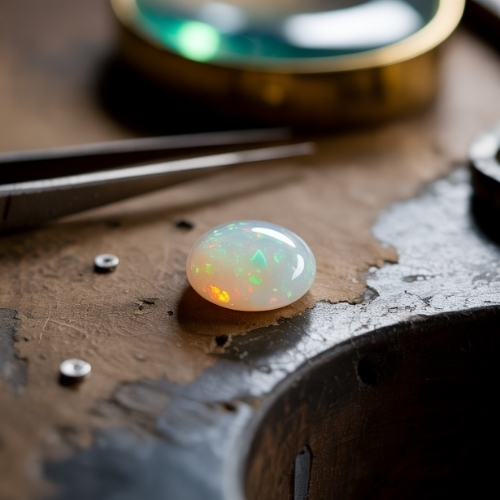
Iridescence produces a rainbow-like play of colors that shift as the viewing angle changes.
The phenomenon occurs because light is bent and split by tiny, repeating structures inside the gem. The most famously example of this is in opal, where microscopic silica spheres disrupt the light to create its signature play-of-color. It’s not exclusive to opal though. It can also appear in rainbow moonstones, pearls, and certain shells.
Unlike adularescence, which produces a soft sheen, iridescence is usually colorful and dynamic, giving the gemstone a lively, sparkling appearance.
Labradorescence

Labradorescence is a metallic play of color that seems to shimmer from within the stone.
Labradorite is the only star here, producing flashes of blue, green, gold, and sometimes purple. The effect is caused by interference of light within thin layers of feldspar. As light enters and bounces between these layers, it splits, creating the iridescent flashes that make labradorite so distinctive.
Colour Change
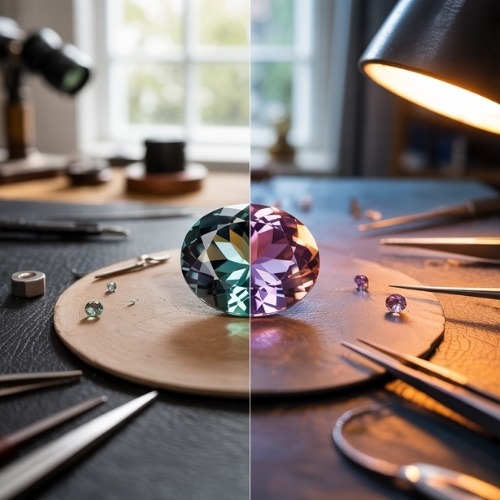
Colour change is a fascinating phenomenon where a gemstone appears to show different colors under different lighting conditions.
The most famous example is alexandrite, which looks green in daylight and red under incandescent light. This type of color change occurs due to something called selective absorption. This is when the crystal absorbs certain wavelengths of light while transmitting others. As different light source are made up of different wavelengths the gem’s color shifts.
A related but distinct effect is dichroism (sometimes called dichromatism), where a gemstone shows two different colors when viewed from different angles. This occurs because light is absorbed differently along the different crystal axes.
Dichroism is seen in gemstones such as iolite, tanzanite, and tourmaline, and can be particularly striking in well-cut faceted stones, where the color shifts depending on the viewing angle. Unlike color change gemstones, dichroism is independent of the type of light. It’s purely down to the direction you look at the stone from.
🔗 You might also enjoy reading What Gives Gemstones Their Colour?
Why Understanding Gemstone Optical Phenomena Matters
Understanding optical phenomena adds a deeper appreciation for gemstones. These effects reveal the hidden structures that make each stone unique, giving them life and character. From shimmering adularescence to enchanting color shifts, optical phenomena remind us that gemstones are not just objects, they’re some of nature’s most captivating treasures.
📌 Don’t forget to save this Gemstone Optical Phenomena guide so you can find it again!