
Estimated reading time: 6 minutes
August is a month of golden light, slow sunsets, and that soft shift between high summer and the first hints of change. It carries both warmth and quiet depth. This layered, glowing energy is beautifully reflected in spinel, August’s newest official birthstone. With its incredible range of colours and long, often misunderstood history, spinel offers something a little different for late summer birthdays to the classic green of peridot.
Jump to:

Why Spinel is August’s Birthstone
Spinel is a relatively recent addition to August’s birthstone lineup. While many traditional birthstones trace their origins back to ancient texts and early cultural traditions, spinel was officially added in 2016 when the American Gem Trade Association (AGTA) expanded the modern birthstone list.
The goal was to introduce gemstones that better reflect both historical significance and modern availability. Spinel was a natural choice. It has been used in jewellery for centuries, often mistaken for other more famous gems, and is found in a stunning range of colours.
Although peridot remains the primary August birthstone, spinel offers a more diverse alternative. From vivid reds and pinks to calming blues, soft greys, and even lavender tones, it gives August-born individuals more freedom to choose a stone that truly resonates with them.
🔗 Explore the History of Birthstones to learn more about this evolving tradition
History and Lore of Spinel
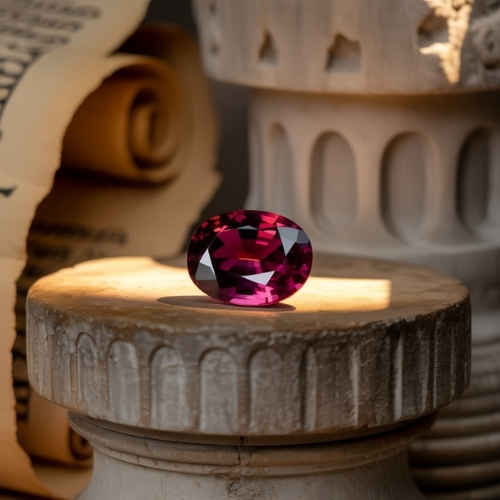
Spinel has a long and fascinating history, though much of it was hidden behind mistaken identities. For centuries, spinel was believed to be ruby due to its similar rich red colour. Some of the most famous “rubies” in history are now known to be spinel.
One of the most well known examples is the Black Prince’s Ruby, set in the British Imperial State Crown. Despite its name, it is actually a red spinel. The Timur Ruby, another historic gemstone, also turned out to be spinel rather than ruby.
These stones were treasured by royalty across Asia and Europe, particularly along ancient trade routes such as the Silk Road. Spinel deposits in regions like modern day Myanmar and Tajikistan supplied many of these remarkable gems.
Its long history may have been misunderstood, but its importance was never diminished.
🔗 Dive deeper into Spinel Myths and Legends (coming soon)
Spinel’s Meaning, Symbolism, and Energy
Spinel is often associated with revitalisation, inspiration, and renewed energy. It is seen as a gemstone that helps restore motivation and bring a sense of balance, especially during times of stress or change.
In crystal traditions, spinel is believed to encourage resilience and emotional strength. It is often linked to reigniting passion and joy, making it a popular stone for those feeling emotionally deflated or stuck.
Different colours of spinel are also thought to carry slightly different energies. Red spinel is often connected to vitality and courage, pink spinel to love and healing, and blue spinel to clarity and communication.
As an August birthstone, spinel reflects that late summer feeling of both fullness and transition. It encourages you to enjoy the present while gently restoring your energy for what comes next.
🔗 Discover more about the Symbolic and Spiritual Meanings of Spinel
Shades, Varieties, and Buying Tips
One of spinel’s most appealing qualities is its colour range. Unlike peridot, which only occurs in green, spinel can be found in a wide spectrum of hues.
Red spinel is perhaps the most famous and has historically been confused with ruby. Pink spinel offers softer, romantic tones, while blue spinel ranges from bright cobalt shades to deeper, more muted hues. Grey and lavender spinels have also become increasingly popular for their subtle, modern feel.
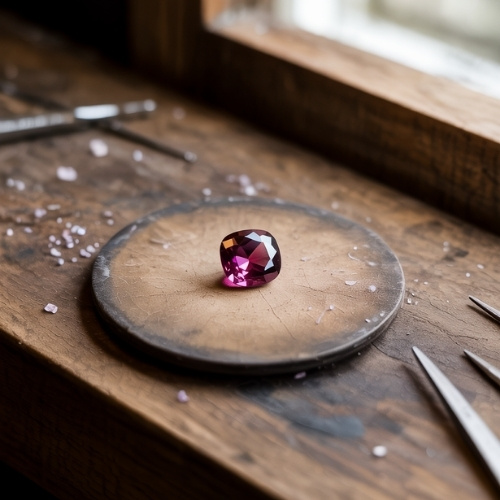
Spinel is a durable gemstone, with a hardness of 8 on the Mohs scale, making it suitable for most types of jewellery. It also has excellent clarity and brilliance, often appearing bright and lively even when the stones are smaller.
When buying spinel, colour is the most important factor. Vivid, well saturated stones are generally the most desirable. Clarity is typically very good. Although included stones are common, so too are eye clean ones, making it relatively easy to source an inclusion free stone should your design ask for one.
One of spinel’s biggest advantages is that it is rarely treated, which makes them especially appealing to collectors and jewellers looking for completely natural gemstones.
🔗 Working with spinel gemstones? Have a read of my Jewellers Guide to Spinel
Fun Facts About Spinel
- Spinel was only recognised as a separate mineral from ruby in the late 18th century.
- Spinel forms in the same geological environments as ruby and sapphire.
- Flame fusion spinel was one of the earliest synthetic gemstones ever created.
Alternatives for August’s Birthstone
Although spinel is now recognised as one of August’s birthstones, it sits alongside other options:
Peridot, which remains the primary and most widely recognised August birthstone. It’s known for its bright green colour, although it comes in a range of green shades.
Sardonyx, a banded variety of chalcedony, is considered a traditional August birthstone. It was historically the gemstone most common association with the month of August, but has dropped out of fashion since it didn’t make the standardised list in 1912.
Spinel’s Place in August Birthstone Lore
Spinel brings a fresh perspective to August’s birthstone story. Its vibrant colours, fascinating history, and natural beauty make it a compelling alternative to more traditional choices. Whether you’re drawn to the rich reds, soft pinks, or calming blues, spinel offers something for everyone. It captures that late summer balance of energy and ease, making it a meaningful gemstone for August birthdays.
🛍️ Interested in using pre-owned spinel in your next design? View our current Spinel selection
📌 Save this post so you can revisit Spinel, August’s Birthstone, whenever you need inspiration