Estimated reading time: 6 minutes
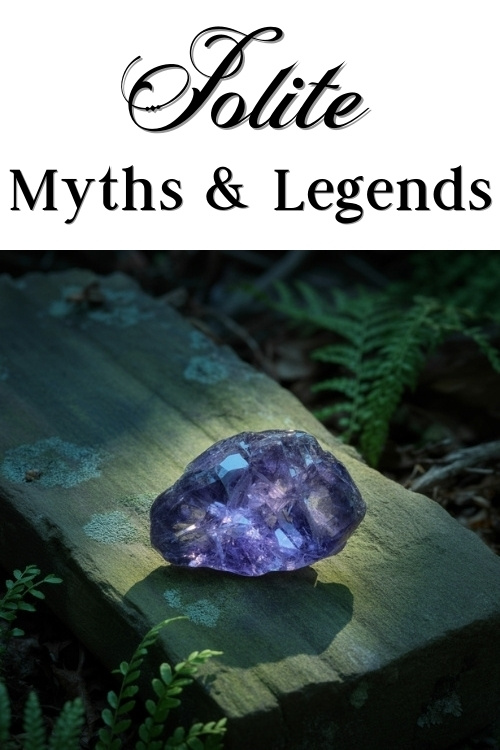
Iolite, with its dreamy shades of blue and violet, doesn’t get quite the same spotlight as tanzanite or sapphire. Yet hidden within its depths are centuries of stories, myths, and traditions. From Viking explorers charting the seas to seekers in search of wisdom, iolite has been tied to vision, guidance, and inner clarity for generations.
🔗These ancient stories often influence how we view iolite today, from spiritual qualities to symbolic associations. Discover The Symbolic & Spiritual Meanings of Iolite
Jump to:
Iolite and the Viking Navigators

One of the most famous legends about iolite comes from the seafaring Vikings and their mysterious “sunstone”.
Sailing in the North Atlantic with its cloud covered skies and mists rising from the water was no small feat. According to the stories, Viking navigators discovered that iolite could act like a natural compass. They would hold the stone up to the sky and slowly rotate it. As they did, the stone would amplify and clarify the sunlight. Even through cloud cover it could reveal a bright spot where the sun really was. This meant they could chart their course using the sun, even when it was completely hidden.
It sounds like magic, but the science is actually solid. Some minerals can do this. They are known as polarising filters, and iolite is one of them. We know from historic texts that Vikings did discover a type of polarising filter they used for navigation. The question is whether it was iolite specifically. Ever since it was suggested as a likely candidate, the idea stuck. Which is why the nickname “Viking Compass” has followed iolite ever since.
🔗Explore The Mystery of the Viking Sunstone (coming soon)
Iolite in Ancient Egypt: The Eye of Horus
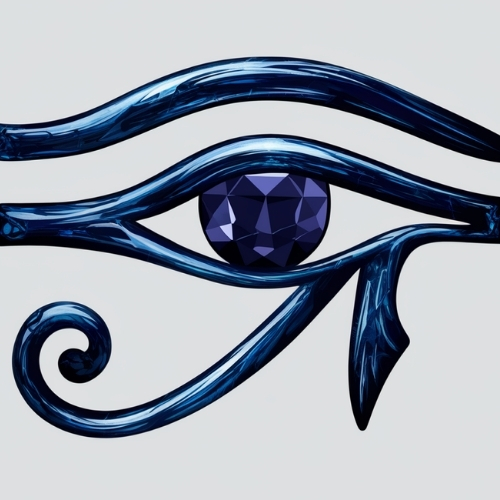
Egyptian mythology gives us another fascinating tale. Set, the god of chaos, had overthrown and killed his brother Osiris to become ruler of Egypt. Osiris’ son Horus, the falcon headed god of the sky and protection, sought to stop his uncle. He wanted to avenge his father and protect Egypt from Set’s rule. A fierce battle ensued, and although Horus won, he lost his eye in the process.
Some stories suggest that Horus’ lost eye was replaced with a deep blue or violet gemstone, which restored his sight. This stone symbolised both healing and renewed power, as Horus grew even stronger once his sight was restored. While I can’t say with certainty that the gemstone was iolite, its colouring and the fact it would have been around in ancient Egypt, makes it a strong candidate.
What is known is that the Eye of Horus became one of the most powerful protective amulets in ancient Egypt. It was believed to bring strength, wisdom, and safety to anyone who wore it.
🔗Discover the full story of The Eye of Horus (Coming Soon)
Iolite in Ancient India: A Stone of the Third Eye
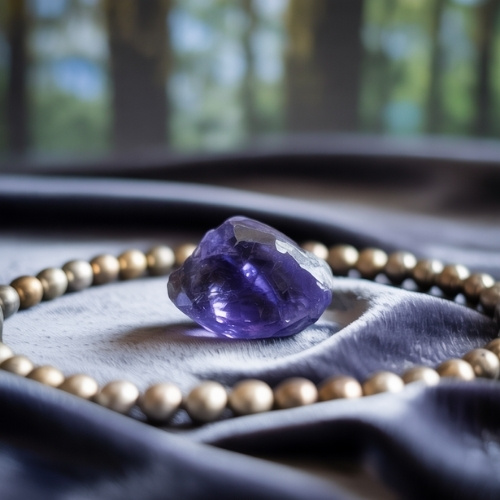
Though iolite isn’t directly named in ancient Hindu texts, its rich blue hues echo the qualities tied to the third-eye chakra. In more modern interpretations, the stone is thought to help with meditation, supporting clarity, insight, and the ability to see beyond everyday illusions.
Some traditions also link iolite to rituals that encourage wisdom and a deeper connection to the divine.
Iolite in Greek and Roman Mythology
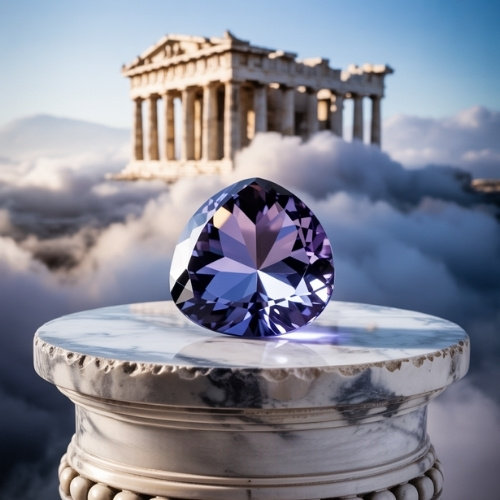
Iolite doesn’t appear directly in Greek or Roman myths, but its shifting colours suggest it probably captured imaginations back then. From one angle it shows a deep blue, and from another it can appear pale or even nearly colourless. Because of this, some scholars think it could have been associated with gods of vision, prophecy, and messages like Apollo or Hermes. To ancient eyes, a stone that seemed to change colour as you move it might well have felt like the key to some hidden truth.
Iolite in Early Medieval Europe
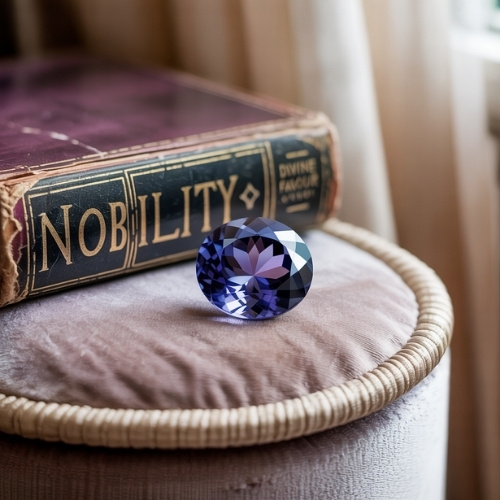
By the early medieval period, gemstones of deep blue and violet were prized by both nobility and the church. Amethyst was the clear favourite, but iolite found its place too, sometimes under the name “water sapphire.” Travellers and sailors were said to carry these stones for protection and safe passage, believing they offered strength and direction on uncertain journeys.
Iolite in Shamanic Traditions

In other traditions, iolite is connected to vision in a more mystical sense. Shamans and healers are thought to have used it to enhance dreams, encourage lucid visions, or open the mind to other realms. Because of this, iolite has sometimes been called a “portal stone”. A gem believed to help bridge the seen and unseen worlds.
A Gemstone of Transformation and Vision
Though it doesn’t share the fame of rubies or emeralds, iolite’s blend of optical wonders and legendary tales makes it a gem worth knowing.
It has been imagined as a compass for Viking sailors, a symbol of restored sight in Egypt, a tool for meditation in India, and even a doorway for shamans seeking wisdom. At its heart, iolite has always been linked with vision, clarity, and transformation.
Today, it still speaks to those who love gemstones with both beauty and meaning. A stone that reminds us exploration isn’t only about the world around us, but also about the journey within.
Just a quick side note – these iolite myths and legends make great marketing content, so feel free to retell them to your audience!
🔗 Want some guidance on using gemstone knowledge to market your jewellery business? Read Using Gemstone Knowledge to Boost Your Jewellery Sales
🔗 Working with iolite in your jewellery making? Take a look at my Jeweller’s Guide to Iolite
🛍️ Curious to find a pre-owned iolite for your next design? Check out what’s available.
📌 Save these iolite myths and legends so you can easily find them again.