Estimated reading time: 6 minutes
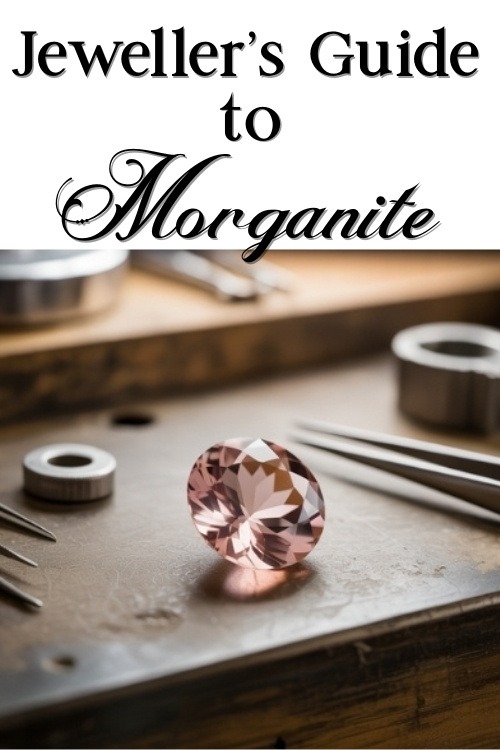
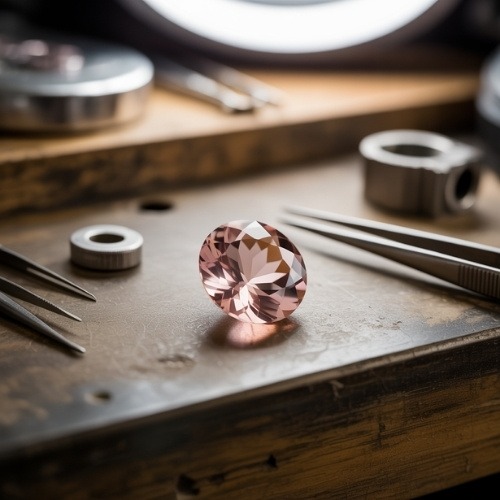
Morganite’s soft blush tones, ranging from delicate peach to warm pink, seem to glow from within rather than shine on the surface. There is a calm elegance to it that draws you in gently, making it a favourite for those who want something romantic and rare yet understated.
Jump to:
Basic Identification Information
Name & Synonyms
Morganite
Also known as Pink Beryl and occasionally Rose Beryl
Species
Beryl
Colour Range
Pale pink to peach, and salmon
(A more tradition colour description – pink, purplish red, orangy red, reddish orange)
Refractive Index
1.578 – 1.600
Birefringence
0.008 – 0.009
Optical Sign
Uniaxial negative
Pleochroism
Weak to moderate 2 colours
red and purple-red OR bluish pink and pale pink
Specific Gravity
2.67 – 2.90
Fluorescence
Inert to weak purple, pink or violet glow
Lustre
Vitreous (glass like)
Clarity
Typically eye-clean (Type I)
Gems Often Mistaken For
Tourmaline, rose quartz, Sapphire, Topaz
Mohs Hardness
7.5 to 8
Wearability
Good
Birthstone
Not a traditional birthstone
Spotting Synthetic (Lab-Grown) Morganite
Lab-grown morganite is relatively uncommon compared to many other gemstones, but synthetic beryl does exist and can occasionally appear on the market. Because of this, careful observation and, where needed, proper testing are important.
A good starting point is the gemstone’s colour. Natural morganite typically has a soft and delicate tone, whereas some lab-grown material can display a much stronger, almost electric pink. However, colour alone is never a reliable indicator of origin, so this should always be followed by closer examination under magnification.
When examining the stone, you are looking for both signs of natural formation and features associated with synthetic growth. Natural morganite may contain subtle inclusions formed during its development, while synthetic beryl, particularly that grown using hydrothermal methods, often shows distinctive angular or chevron-like growth patterns and more structured colour zoning. In contrast, any colour zoning in natural stones tends to appear softer and more organic rather than uniform or geometric.
Another feature sometimes seen in synthetic beryl is the presence of nail-head spicules, a type of inclusion with a characteristic nail-like shape. While not always present, their appearance can be a useful indicator of laboratory growth.
Common Treatments
Heat treatment is both common and widely accepted in morganite, and is primarily used to refine its colour. This process gently removes any yellow or orange undertones, allowing the gemstone’s soft pink hues to appear clearer and more refined. The results are stable and permanent, meaning the colour will not fade over time with normal wear.
In contrast, untreated morganite often displays more peach or slightly orangey tones, which some collectors appreciate for their natural warmth.
Durability & Setting Considerations
Morganite is a reasonably durable gemstone, making it well suited to a wide range of jewellery, including rings, earrings, pendants, and bracelets.
However, like all beryls, it benefits from thoughtful setting choices, particularly in pieces designed for daily wear. Protective settings such as halos or bezels, while not essential of morganite, can help shield the stone from damage should it be accidentally knocked.
Explore our selection of pre-owned Morganite Gemstones for your next jewellery creation.
Care Instructions
Cleaning
Morganite is relatively easy to care for and responds well to gentle cleaning. Warm soapy water and a soft brush are usually all that is needed to maintain its sparkle.
It’s best to avoid ultrasonic and steam cleaners when dealing with morganite set jewellery so you don’t accidently damage the stone.
Storage
When not being worn, morganite should be stored separately from harder gemstones such as diamond or sapphire to prevent surface scratches. Keeping it in a soft pouch or a lined jewellery box will help protect both the stone and its setting.
Daily Wear
For everyday wear, it is best to remove morganite jewellery during activities that involve heavy work or exposure to harsh chemicals. Although durable, the stone can chip if subjected to a hard knock, so a little mindful wear goes a long way in preserving its beauty.
Market & Ethical Notes
Morganite is sourced from several regions around the world, including Brazil, Madagascar, Mozambique, Afghanistan, and the United States.
In terms of value, stones with stronger, more saturated pink tones tend to command higher prices, and although larger gems will cost more overall, the price per carat doesn’t typically increase significantly based on size alone.
From an ethical perspective, morganite is often mined in areas where small-scale operations are common, which can make traceability less consistent. As a result, sourcing from reputable suppliers is an important consideration.
Symbolic & Spiritual Meanings
Morganite is often associated with gentle, heart-centred energy, making it a popular choice for those drawn to gemstones with a softer, more emotional resonance. It is commonly linked to the heart chakra and is said to encourage compassion, emotional healing, and a sense of inner calm. Many believe it supports love, trust, and deep emotional connection, which has contributed to its growing popularity in engagement and romantic jewellery.
🔗 Dive deeper into Morganite’s Symbolic & Spiritual Meanings (coming soon)
Etymology
Morganite was named in honour of J.P. Morgan, the American financier and gem enthusiast. The name was proposed in the early 20th century by gemologist George F. Kunz, recognising Morgan’s significant contributions to mineral collecting and the arts.
🔗 Curious about how morganite was viewed in ancient cultures? Explore its fascinating myths and legends (coming soon)
🛍️ Want some extra support when creating jewellery with a wide variety of gemstones? Check out my Gemstone Bench Guides
📌 Save this jeweller’s guide to morganite for quick reference next time you’re working with this stunning gem.