Estimated reading time: 6 minutes
Opal has always stirred the imagination with its rainbow-like flashes of colour. With no two stones being the same, opal became a favourite of storytellers, poets, and jewellers. Depending on the tale, it’s been celebrated as a stone of good fortune, or mistrusted as something mysterious and dangerous. Let’s wander back through history and explore some of the myths and legends that gave opal its mystical reputation.
🔗These ancient stories often influence how we view opal today, from spiritual qualities to symbolic associations. Discover The Symbolic & Spiritual Meanings of Opal
Jump to:
Ancient Greece: Tears of a God
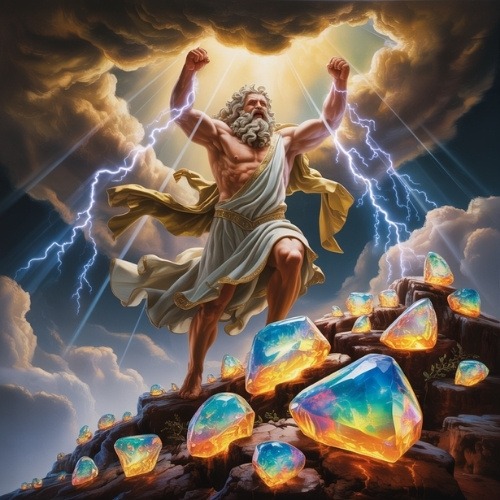
In Greek mythology, the Titans were the original ruling gods of the universe, led by Cronos, Zeus’s father. Fearing a prophecy that one of his children would overthrow him, Cronos swallowed them at birth, imprisoning them within himself. Rhea, Zeus’s mother, wanted to spare her son from this fate, so she hid him on the island of Crete. Protected by her love, Zeus grew strong and eventually rose up against the Titans, defeating his father and freeing his siblings, the future Olympian gods.
After his victory, Zeus wept tears of joy and triumph. His tears fell to the earth, where they were transformed into opals.
This divine origin helped explain opal’s shifting colours and luminous glow. To the Greeks, a gemstone that carried the tears of the king of the gods was destined to hold great power. Opals were thought to grant foresight and prophecy, making them especially prized by seers and oracles.
Roman Empire: A Gem of Hope and Purity
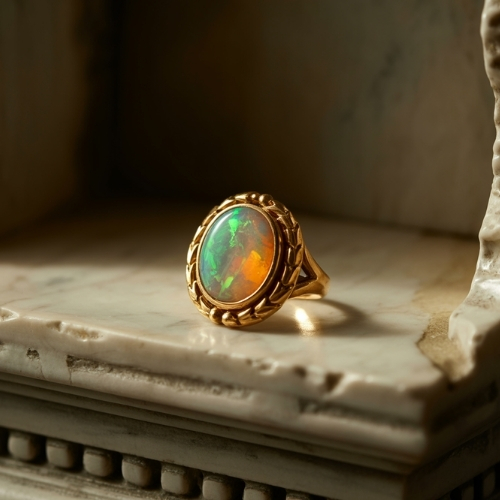
To the Romans, opal was nothing short of extraordinary. Its shifting flashes reminded them of fire, lightning, and even the depths of the sea. The philosopher Pliny the Elder once wrote that opals contained “the glories of the most precious gems,” and it’s easy to see why. For them, it symbolised purity and hope, and it quickly became a favourite among nobles and emperors.
One Roman tale tells of a senator who carried an opal ring while fleeing exile. The gem was said to bring him divine favour, helping him escape capture. That is until he lost the stone, and with it, his luck.
Opal was also a lover’s gift. To Romans, a change in the gem’s colours hinted at shifting emotions. Making opal rings, possibly, the very first version of a mood ring.
Arabian Myth: Lightning Trapped in Stone
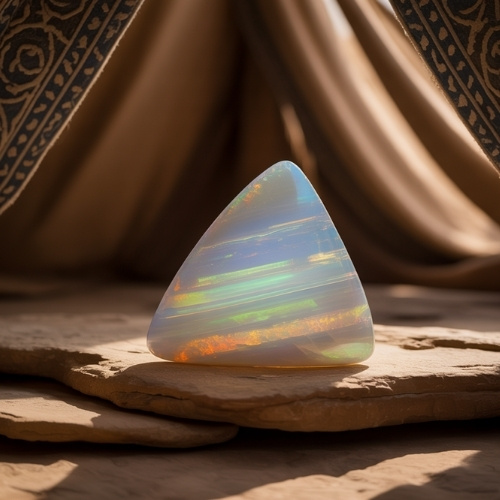
In Arabian folklore, opals weren’t born from the earth. Instead, they were believed to fall from the skies during thunderstorms, carrying bolts of lightning locked inside their depths.
The brighter the flashes, the more powerful the stone was thought to be. Some stories even claimed a powerful opal could grant invisibility. A useful trick for travellers, warriors, or thieves.
Australian Aboriginal Dreamtime: The Creator’s Footprint

In Aboriginal Australian mythology, opal takes on a sacred meaning. Among the peoples of the outback, where opals are still found today, there are Dreamtime stories that describe the Creator descending to earth on a rainbow. When his foot touched the ground, the rocks beneath turned into glowing opals.
For some tribes, opals were ancestral stones, carrying the spirits of their people.
And then there’s Lightning Ridge, one of the most famous opal-mining areas. Its name is tied to a legend that says lightning once struck the earth there, seeding the ground with colour.
European Middle Ages: A Stone of All Powers, Then a Fall from Grace
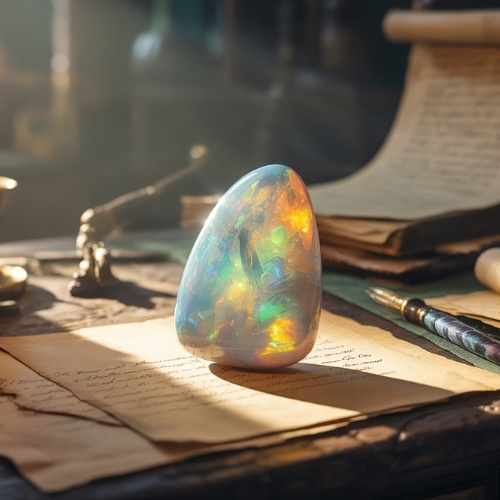
In medieval Europe, opals were highly prized for their play-of-colour. They were viewed as a stone that captured the powers of every other gem. Wear an opal, the tales went, and you gained ruby’s passion, emerald’s wisdom, and diamond’s strength, all in one.
It also gained a reputation as a trickster’s charm. Thieves and illusionists valued it for its supposed gift of invisibility. While writers and artists wore it for inspiration, believing its colours sparked the imagination.
But this glowing reputation dimmed in the 19th century. In 1829, Sir Walter Scott’s novel Anne of Geierstein featured an opal that brought ruin and death to its wearer. And the novels reader’s took it seriously. Opal sales collapsed almost overnight, and the idea of opal as “unlucky” spread like wildfire. From then on, many believed wearing opals was only safe if it was your birthstone.
Though that superstition has mostly faded today, the sense of opal as a stone balanced between light and shadow still lingers.
A Stone of Mystery and Mirrored Meaning
Through every culture and story, opal has been seen as something more than just a gem. Whether seen as a god’s footprint, a shard of lightning, or a spark of creativity, opal has always carried an air of enchantment. Its myths remind us that beauty often comes with depth and mystery, and that light and shadow are never far apart.
Whether you wear it for luck, insight, creativity, or simply for its beauty, opal remains one of the most mesmerising gemstones of all. Ever-changing, endlessly deep, and always unique.
Quick side note – these opal myths and legends make great marketing content, so feel free to retell them to your audience!
🔗 Want some guidance on using gemstone knowledge to market your jewellery business? Read Using Gemstone Knowledge to Boost Your Jewellery Sales
🔗 Working with opal in your jewellery making? Take a look at my Jeweller’s Guide to Opal
🛍️ Curious to find a pre-owned opal for your next design? Check out what’s available.
📌 Save these opal myths and legends so you can easily find them again.