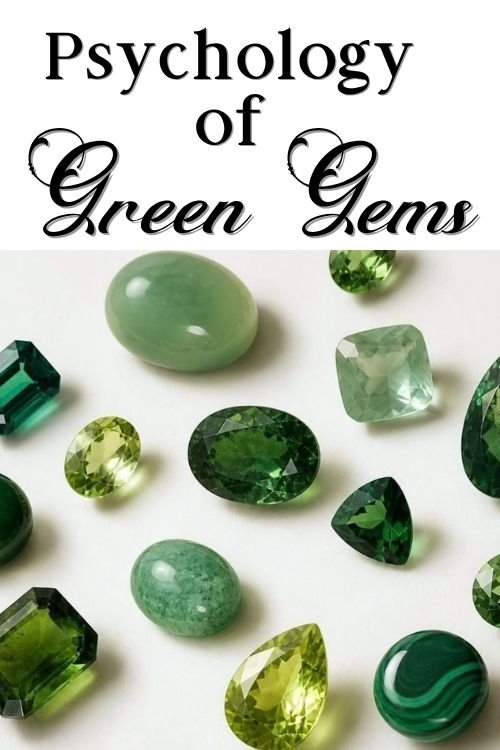
Green is the colour of living things. From the zesty lime of peridot to the deep, velvety forest of a fine emerald, every shade carries its own emotional weight.
It’s also the colour our eyes are most sensitive to. In daylight, human vision picks up green light more readily than any other colour. So when a green gem catches someone’s eye, that’s not just a figure of speech.
Whether you’re designing a piece, choosing a stone for yourself, or writing a description that needs to do some emotional connecting, understanding what green communicates, at every depth, can help you work with more intention.
What Emotions Are Linked to Green?
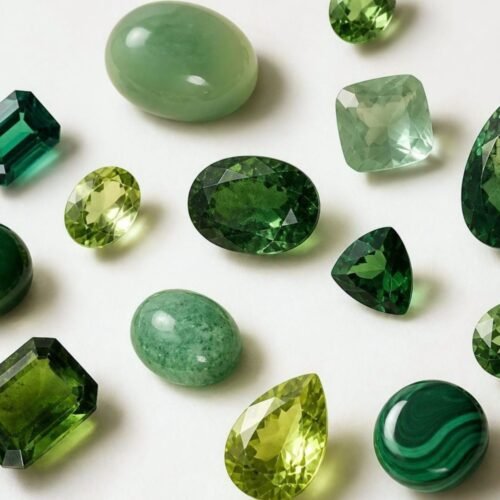
At its brightest, green is fresh and full of energy. Think young leaves, spring meadows, and the first shoots pushing up through the soil. It’s one of the most optimistic colours in the spectrum. It feels alive. Examples of this would be lime green peridot and apple green chrysoprase, which carry associations with renewal, growth, hope, and new beginnings.
As green deepens, that energy slows down and puts down roots. Where bright green sprouts, dark green endures. It’s the steady confidence of an old oak rather than the rush of a spring shoot. Emerald, jade, and forest toned tourmaline, which speak to wisdom, stability, abundance, and quiet strength are great examples of this.
Both ends of the spectrum have a side that could be seen as slightly negative too. Bright green can tip into naivety, impulsiveness, or restlessness, and without contrast it can feel a little hyperactive. Dark green can read as rigid, old fashioned, or heavy.
And green in any shade has a long running link with envy. Shakespeare’s “green-eyed monster” has a lot to answer for.
None of this is actually a flaw. It’s simply the other side of the same coin. Knowing where a stone sits on that line helps you choose language and design details that lean the right way for the piece you’re making.
Using Green in Jewellery Design
If you’re starting from a feeling rather than a finished design, green is a generous place to begin.
A piece to celebrate a fresh start, like a new job, a new home, or a bit of personal reinvention, will naturally pull towards the brighter end. A piece meant to mark endurance, protection, or a long term commitment tends to sit better with deeper greens.
If the design already exists and you’re choosing a stone to fit it, the same logic applies in reverse. A minimalist stacking ring calls for a crisp peridot or a minty tourmaline. A vintage style signet or a symbolic pendant carries an emerald or deep green jade far better. Floral and organic designs love bright green. Classic and antique styles love dark green.
Balancing green depends on where in the spectrum you’re working.
Bright green is lively, so the job is keeping it fresh without letting it shout. Silver and white gold keep it crisp. Yellow gold mellows it and adds a touch of sophistication. Pinks and purples make for a playful, unexpected palette.
The deeper end asks for the opposite approach. Dark green absorbs light and can feel heavy, so it benefits from intentional contrast. Warm gold or brass brings vintage richness. Pale partners like pearls, moonstone, or white sapphire add soft drama. Hammered textures, matte finishes, or oxidised silver bring out its earthy side.
Across the whole family, green works well as either the centrepiece or an accent. Either way, it rewards a bit of breathing space. Let it grow into the design rather than crowding it.
One practical note for makers. Green gems vary a lot in durability. Emerald is usually included and often clarity enhanced, so it doesn’t love knocks, heat, or ultrasonic cleaners. Chrome diopside and malachite are softer still. Protective bezels, pendants, and earrings tend to be your friends with many of the green gemstones.
Which Customers Are Drawn to Green?
Green tends to attract people who feel a pull towards nature, growth, and authenticity. Which end of the spectrum they reach for usually says more about what they’re looking for in that moment than their personality as a whole.
Brighter greens appeal to optimists, nature lovers, springtime dressers, and anyone marking a fresh chapter. Deeper greens draw in old souls, thoughtful personalities, and people who want jewellery that feels timeless rather than trend driven.
Green also has a strong following among crystal lovers, where it’s linked with the heart chakra, love, and emotional balance. Across the board, it’s a great gender neutral choice.
That connection to growth and the natural world runs through birthstone and zodiac traditions too.
Birthstones. Green appears twice in the birthstone calendar, neatly bookending the growing season. May belongs to emerald and August belongs to peridot. Emerald also marks both the 20th and 35th wedding anniversaries, so it isn’t just for May babies.
Zodiac. On the star sign side, the light and dark split shows up again. Brighter greens suit lively, curious signs drawn to balance and fresh energy, such as Gemini and Libra. Deeper greens resonate with signs that value structure and depth, like Capricorn and Scorpio. The earth signs Taurus and Virgo sit happily across both ends.
So whether someone’s shopping by birth month or by star sign, there’s a green stone ready and waiting.
Ten Green Gemstones for Jewellery Making
- Emerald. The green most people picture first. A variety of beryl coloured by chromium and vanadium, it’s long been tied to love, wisdom, and royalty. Almost every emerald has inclusions, affectionately called its “jardin”, which is French for garden. Most are clarity enhanced with oil or resin, so keep it away from ultrasonic cleaners and heat.
- Peridot. August’s birthstone and often pure lime zing, although it can also be found with more olive green tones. Peridot is gem quality olivine, and it’s one of the few gems that only comes in green, thanks to the iron in its structure. It’s also a cosmic gem, having been found in meteorites. At 6.5 to 7 on the Mohs scale, it’s happiest in earrings, pendants, or protective ring settings.
- Green Tourmaline. The one that bridges both ends of the family, running from soft mint right through to deep forest. Tourmaline often shows a darker colour down the length of the crystal, so cutters orient it carefully to get the best green. Fairly scratch resistant at a hardness of 7 to 7.5, tourmaline is a great all rounder gemstone.
- Tsavorite Garnet. A vivid green garnet first discovered in Tanzania in 1967 and named after Kenya’s Tsavo National Park. It has bright sparkle, usually comes untreated, and is tougher than emerald. A brilliant pick for emerald lovers who need something more hard wearing.
- Jade. Actually two different minerals, jadeite and nephrite. Its interlocking crystal structure makes it incredibly tough, perfect for bangles, carvings, and everyday wear. Jade has thousands of years of meaning in China, Central America, and New Zealand. A tip for buyers: some jadeite is bleached, polymer filled, or dyed, so always check what you’re purchasing.
- Chrome Diopside. Intense forest green, coloured by chromium and mostly mined in Siberia. It gives you emerald depth at a much friendlier price, and usually with fewer inclusions. The colour darkens quickly as size goes up, so smaller stones often look best. At a hardness of 5.5 to 6, it’s better suited to earrings and pendants than everyday rings.
- Chrysoprase. A calm, apple green chalcedony that gets its colour from nickel, with Australia as the main source. Its soft, translucent glow suits gentle and organic designs. It can fade with prolonged exposure to heat or strong sunlight though, so suggest customers don’t store it on a sunny windowsill.
- Malachite. Bold, swirling bands of green that are instantly recognisable, even to non-gem people. It’s a copper mineral with a long history in protective jewellery. It’s soft (3.5 to 4 on the hardness scale) and sensitive to acids and heat, so it’s best bezel set into pendants and earrings rather than daily wear rings.
- Moss Agate. Clear to milky chalcedony filled with green mineral inclusions that look like moss, ferns, or tiny landscapes. Despite being called agate, it isn’t technically one, as it lacks banding, but nobody’s complaining. Every piece is unique, which makes it a firm favourite for boho and nature inspired designs.
- Prasiolite. A soft, minty green quartz. Nearly all prasiolite on the market is heat treated amethyst, as natural material is so rare some think it doesn’t actually exist. You’ll sometimes see it sold as “green amethyst”, but prasiolite is the correct name. Durable, affordable, and lovely for fresh, airy pieces.
Talking About Green: Marketing Language That Resonates
The language you use around a green stone should match where it sits on the spectrum. Brighter greens respond well to words like fresh, zesty, uplifting, rejuvenating, and springlike. Deeper greens call for grounded, rooted, timeless, serene, and rich.
There’s also a quieter register worth knowing how to use deliberately. For bright greens, words like zingy, juicy, offbeat, or unruly suit playful, quirky pieces. For dark greens, moody, shadowy, mysterious, or brooding work beautifully for designs with a bit of intrigue.
The same emerald pendant described as “rooted and timeless” tells a very different story to it being called “moody and mysterious”. Neither wording is wrong, they’re just aimed at different customers. The trick is choosing the tone of your language to match the stone, your design and the person you expect to fall in love with it.
🔗 Want to learn more about gemstones and jewellery marketing? Read Using Gemstone Knowledge to Boost Your Jewellery Sales
Final Thoughts
Green, in all its shades, is the colour of life itself. People rarely choose it by accident. Whether it’s a bright peridot for a fresh start or a deep emerald for something built to last, the real work isn’t describing the colour. It’s tapping into what that particular green makes someone feel. Hopeful, steady, alive, connected.
🔗 Interested in discovering more about colour psychology in jewellery design? Read Colour Psychology and Gemstones
🛍️ Looking for sustainable green gemstones for your jewellery creations? Browse green gemstones
📌 Don’t forget to save this guide to the psychology of green gemstones so you can find it again when designing your next collection.