Estimated reading time: 6 minutes
Ancient Egypt was a civilisation where beauty and belief were closely intertwined. Jewellery was never just decorative. Many pieces, especially amulets, were created with purpose, offering protection, guidance, and a connection to the divine. They were worn by people across all levels of society, from pharaohs to everyday individuals. And while materials varied depending on wealth, the intention behind them remained consistent. Stones, colours, and materials all carried symbolic meaning, and when used together, they created pieces rich in layered significance.
Let’s explore seven gemstone combinations inspired by ancient Egyptian jewellery, along with what we know about their individual meanings and how they may have worked together.
Jump to:
1. Lapis Lazuli and Gold
Divine connection and protection
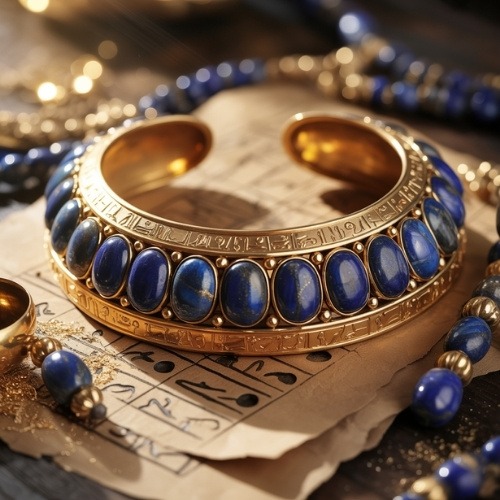
Lapis lazuli was one of the most prized materials in ancient Egypt. Its deep blue colour was associated with the heavens and the divine. Gold, believed to be the flesh of the gods, symbolised eternity and divine power.
This combination of striking blue lapis lazuli set into gold appears frequently in royal and funerary objects. Together they can be seen as expressing a strong connection to the gods and the idea of eternal life. Both central themes within the ancient Egyptians beliefs and way of life.
2. Carnelian and Turquoise
Vitality and protection
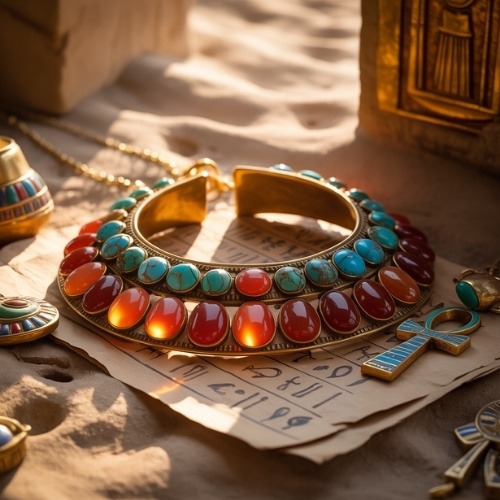
Carnelian, with its rich red-orange tones, was associated with vitality, energy, and the sun. It was often used in protective amulets. Turquoise, a blue-green stone linked to the goddess Hathor, was associated with protection, joy, and wellbeing.
These stones are often found together in Egyptian jewellery. Their combined use may have brought together ideas of vitality and protection in a single piece.
3. Malachite and Lapis Lazuli
Healing and protection
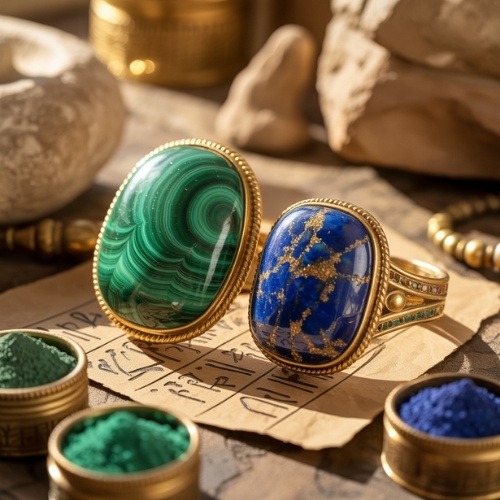
Malachite, recognised by its vibrant green banding, was associated with rebirth and protection. Lapis lazuli, linked to the heavens, added a divine aspect to jewellery. Interestingly both were also used as a pigments in eye makeup.
When set together in jewellery or amulets, these materials combine ideas of protection, rebirth, and connection to the divine, all of which were important themes in ancient Egyptian belief.
4. Red Jasper and Carnelian
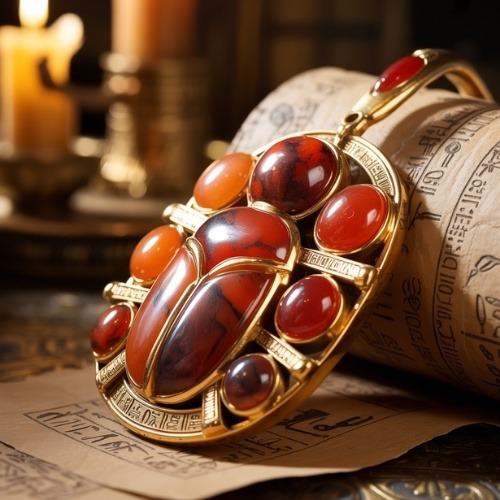
Strength and endurance
Red stones held powerful symbolism in ancient Egypt. Red jasper was used in protective amulets, including heart-related pieces, while carnelian was associated with vitality and energy.
When seen together in a single piece of jewellery, these stones may have reinforced ideas of strength, endurance, and protection, particularly in contexts relating to health and the afterlife.
5. Turquoise and Faience
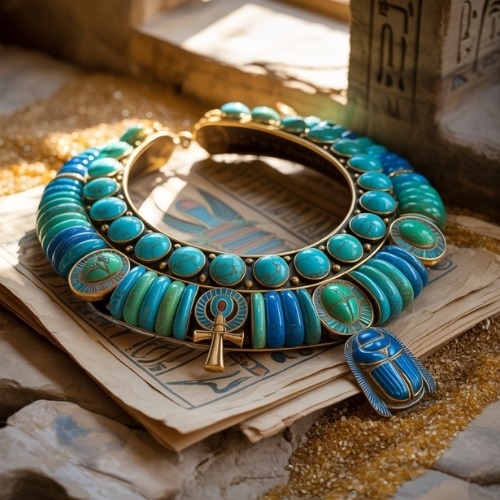
Renewal and protection
Faience, a glazed ceramic material, was widely used in ancient Egypt and often made in bright blue or green tones to resemble stones like turquoise. It symbolised rebirth, fertility, and life. And turquoise carried its own associations with protection and wellbeing.
When used together, these materials reflect themes of renewal and protection that were central to Egyptian jewellery.
6. Amethyst and Gold
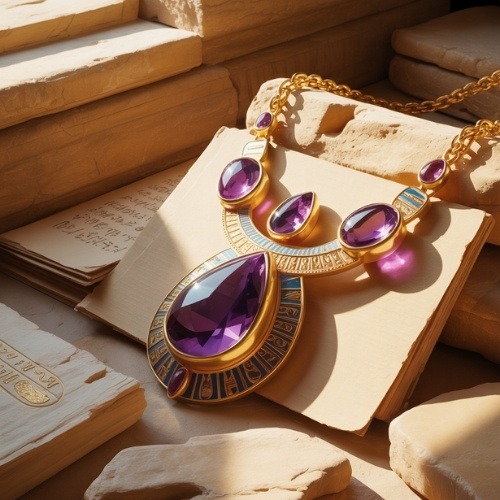
Protection and status
Amethyst was used in ancient Egyptian jewellery, particularly during the Middle Kingdom. Back then it was quiet rare and was thought to have had protective qualities. Gold, as a divine material, was associated with the gods and eternal life.
Pieces combining amethyst and gold would have been more commonly associated with the upper classes and likely reflected both protection and status, as well as a connection to the divine.
7. Feldspar (including Amazonite) and Lapis Lazuli
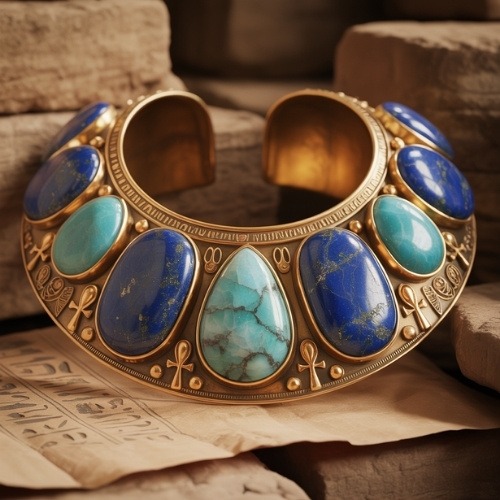
Protection and balance
Feldspar minerals, including amazonite, were used in ancient Egyptian jewellery. Amazonite in particular was associated with protection and was used in amulets and inlays.
When combined with lapis lazuli, these stones bring together protective qualities and associations with the divine, both of which were highly valued in Egyptian adornment.
Why Gemstone Combinations Mattered
Colour played a central role in ancient Egyptian symbolism:
- Blue was linked to the heavens and the divine
- Green represented life, growth, and rebirth
- Red was associated with energy, vitality, and protection
- Gold symbolised eternity and the gods
By incorporating different materials into a single piece, Egyptian jewellers created objects rich in meaning. While we do not have detailed records explaining every combination, surviving artefacts show that these materials were often used together in thoughtful and symbolic ways.
Bringing This Inspiration Into Modern Jewellery
Today, we may not use gemstones in exactly the same way, but the idea of choosing stones for their meaning still resonates. Ancient Egyptian jewellery offers a beautiful reminder that adornment can be both personal and symbolic, and the historical combinations they used can be a lovely source of inspiration. Whether you are drawn to the colours, the history, or the symbolism, these pairings continue to feel just as striking thousands of years later.
🔗 Interested in discovering more about how the ancient Egyptians used gemstones? Try:
Gemstone in the Book of the Dead
The Bread of Osiris (coming soon)
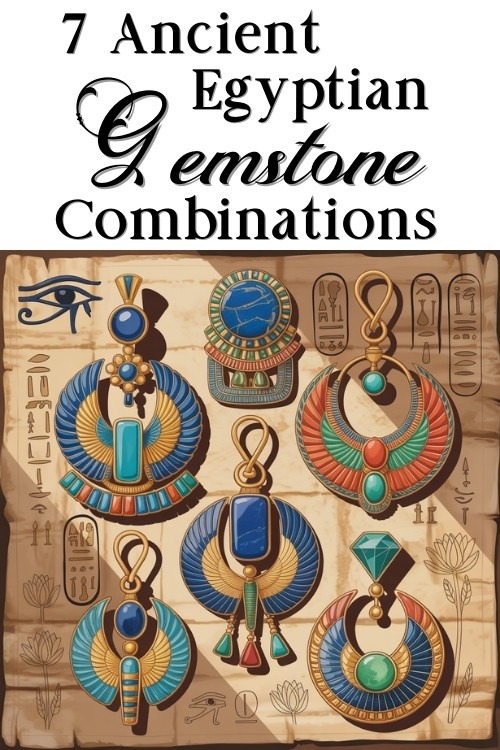
📌 Don’t forget to save these 7 Ancient Egyptian Gemstone Combinations so you can find them again!