Estimated reading time: 5 minutes
April is a month of fresh blooms, bright sunshine, and the dazzling brilliance of diamond. Officially recognised as the birthstone for April, diamond has been treasured for centuries for its sparkle, durability, and timeless elegance. While some modern lists also include clear quartz or white sapphire, diamond remains the true star of April, celebrated by jewellers and gemstone enthusiasts alike.
Jump to:
Why Diamond is April’s Birthstone
Many traditional birthstones have roots that trace back to ancient lists like the biblical breastplate of Aaron. Interestingly, diamond does not consistently appear on those historic lists. In the most recognised interpretation of the breastplate gemstones there is a clear stone, but most scholars think that it was clear quartz rather than diamond. Diamond became connected to April much later as part of a gradual evolution of birthstone traditions.
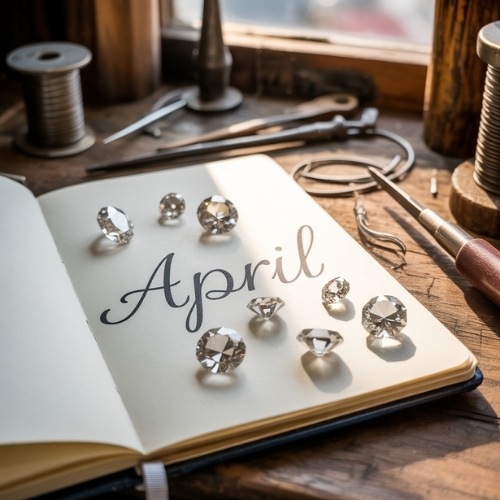
Diamonds were officially named as April’s birthstone in 1912, when the American National Association of Jewelers created a standardised modern list. They looked to combine the various birthstone lists that existed at the time, while favouring transparent, commercially available options. This helped bring consistency to the jewellery trade, while ensuring stock availability for jewellers.
However, diamond prices rose dramatically around the mid 20th century. This was driven by supply control and powerful marketing campaigns, such as the famous 1947 slogan “A Diamond Is Forever”. Despite this price jump, no official, more affordable alternative has ever been added to the modern list.
🔗 Explore the History of Birthstones to learn more about this timeless tradition
History and Lore of Diamonds
For thousands of years, diamonds have captivated humans. Ancient Indian texts describe them as objects of power, worn by royalty for strength and protection. Traders later brought diamonds to Europe, where their hardness, sparkle, and symbolism of eternal love made them highly prized.
In the Middle Ages, diamonds were believed to possess magical powers, offering protection against harm and enhancing courage. In the Renaissance, they were associated with fidelity and devotion and often featured in ceremonial jewellery. Today, diamond’s long history of symbolism adds depth to its sparkle, making it a gemstone that inspires both admiration and connection.
Diamond’s Meaning, Symbolism, and Energy
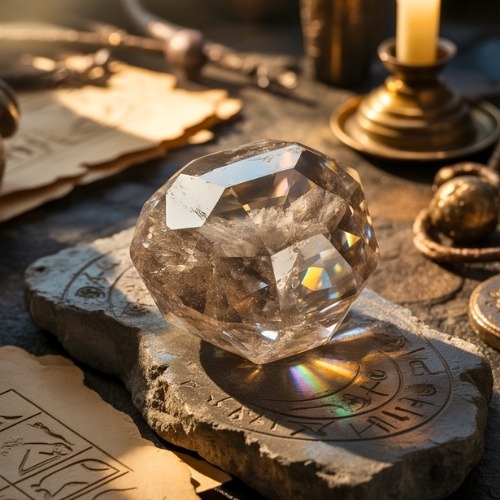
Diamond has long been valued for its stabilising and amplifying qualities. Its clear, radiant tones are associated with clarity, strength, and purity, inspiring focus, confidence, and inner resilience. Across cultures, it has symbolised commitment, courage, and enduring love.
In crystal healing practices, diamond is believed to enhance clarity of thought, support emotional balance, and amplify energy. Whether set in jewellery, placed in a workspace, or held as a personal talisman, it encourages intention, fosters growth, and strengthens meaningful connections.
Varieties, Colours, and Buying Tips
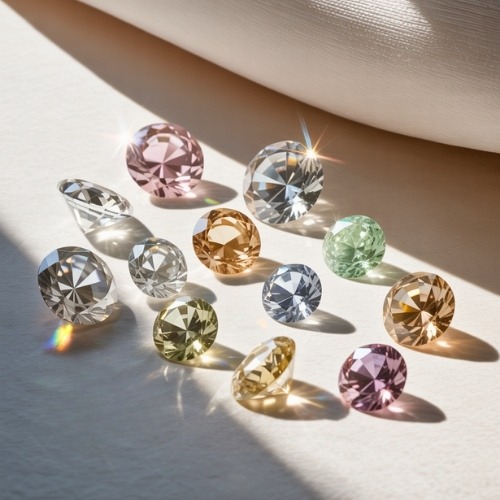
While most people imagine diamonds as colourless, they can occur in a range of hues, including yellow, pink, blue, green, and brown. Each colour variation has its own charm and rarity.
When buying diamonds, the 4 Cs (cut, clarity, colour, and carat weight), are key factors to consider. Stones with excellent cut and high clarity command higher prices, while rare natural colour diamonds can be extraordinary investments.
Many diamonds are left untreated, but some fancy-coloured stones are enhanced to improve their colour. Colourless diamonds with black carbon inclusions may undergo laser drilling and fracture filling to reduce the inclusions visibility. Treatments affect a diamond’s value, so always buy from a supplier who discloses them.
Once purchased, diamonds are relatively easy to care for. Regular gentle cleaning with warm soapy water keeps them sparkling. Avoid harsh chemicals that could damage the setting or surrounding metals.
Fun Facts About Diamonds
- Hardest natural mineral – Diamonds score a 10 on the Mohs hardness scale, making them the most scratch resistant naturally occurring substance.
- Diamonds are ancient – Most diamonds formed deep in the Earth’s mantle over 1 to 3 billion years ago, long before humans existed.
- Origins of the name – The word “diamond” comes from the Greek word adamas, meaning “unconquerable” or “indestructible.”
Modern Alternatives for April’s Birthstone
Although diamond is the only official April birthstone, some modern lists include clear quartz and white sapphire.
Clear Quartz, sometimes called rock crystal, is valued for amplification of energy and intention.
White Sapphire, with a sparkling white hue, is prized for durability and elegance.
Both are lovely stones, but diamond, with its unmatched brilliance and symbolic power, remains the heart of April’s gemstone story.
Diamond’s Enduring Place in April Birthstone Lore
Diamond shines as a gemstone of clarity, strength, and eternal beauty. Its rich history, stunning variety, and symbolic energy make it a perfect companion for April birthdays. Whether you are a collector, jeweller, or someone who simply loves gemstones, diamond offers beauty, meaning, and inspiration in every facet.
📌 Save this post so you can revisit Diamond, April’s Birthstone, whenever you need inspiration.