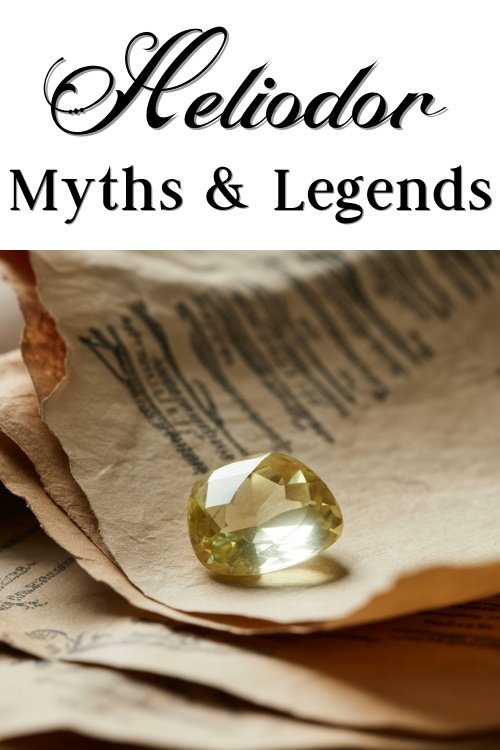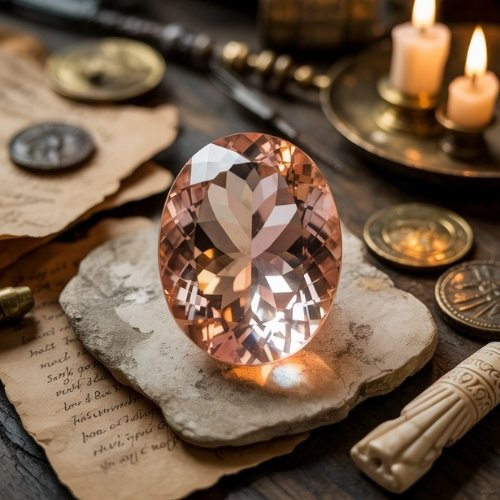
Heliodor looks like a piece of golden daylight, trapped in crystal form, but unlike other beryls, such as emerald and aquamarine, heliodor does not show up in any ancient myths or legends. Why not? It’s simple. For most of history, nobody actually recognised heliodor as its own gemstone.
Before modern gemmology sorted things out, yellow beryls got mixed up with other stones. Most often topaz, chrysoberyl, or citrine. With no name and no identity of its own, heliodor slipped straight through the cracks of folklore. It was only in the early 20th century that this glowing gem finally got its own classification, and a sunlit name.
So, with no ancient myths to draw on directly, I’m taking a different route with this myths & legends installment. I’m going to be looking at colour symbolism, solar mythology, and the stories that belong to heliodor’s wider mineral family.
🔗 These connections have also influenced heliodor’s use within crystal healing, so it’s worth reading The Symbolic and Spiritual Meanings of Heliodor to see where colour and name have helped this modern gemstone find its place.
Greek Symbolism, A Stone Fit for the Sun God

The ancients never knew heliodor by name. But its golden glow instantly brings Helios to mind, the Greek sun god responsible for us having a daytime. It’s easy to imagine him carrying a yellow gem as he drove his blazing chariot across the sky every day.
While the name helios doron, meaning gift of the sun, is a modern invention, the symbolism feels timeless. Yellow and gold stones have long been thought to carry the warmth, protection, and illuminating energy of sun gods, like Helios in Greece or Sol in Rome.
It’s easy to picture heliodor tucked in the pocket of an ancient visionary, artist, or traveller. A talisman for anyone chasing inspiration, guidance, or a bit of clarity on their journey.
A Symbol of Strength and Sovereignty

Golden gemstones have been linked to strength, clarity, and nobility across many different cultures throughout history.
In European tradition, yellow stones often stood for intelligence, confidence, and the divine right to rule. And while Heliodor was never singled out by name, its regal colour places it within these stories and beliefs.
Modern Lore, A Stone of the Solar Plexus

Today, heliodor is mostly linked with the solar plexus chakra, the energy centre tied to confidence, motivation, and self assurance.
Crystal practitioners say heliodor helps quiet fear and self doubt. In its place, it brings a sense of balance and courage. Others see it as a stone of alignment, keeping you energised, focused, and connected to your true path.
Heliodor’s energy is usually described as warm, clear, and quietly uplifting, rather than overwhelming. A bit like watching the sun rise through a soft veil of mist on a quiet morning.
A Bright Companion on the Path Ahead
Heliodor might not carry centuries of mythology, but that does not make it any less inspiring. Its symbolism lies in what it actually is. A golden beryl, a rarity, and a gift of the sun. A stone that carries the spirit of clarity and sunlight within it’s sparkle.
Quick side note, these heliodor myths and legends make great marketing content. Feel free to retell them to your own audience.
🔗 Want some guidance on using gemstone knowledge to market your jewellery business. Read Using Gemstone Knowledge to Boost Your Jewellery Sales
🔗 Working with heliodor in your jewellery making. Take a look at my Jeweller’s Guide to Heliodor.
🛍️ Curious to find a pre owned heliodor for your next design. Check out what’s available
📌 Save these heliodor myths and legends, so you can easily find them again.