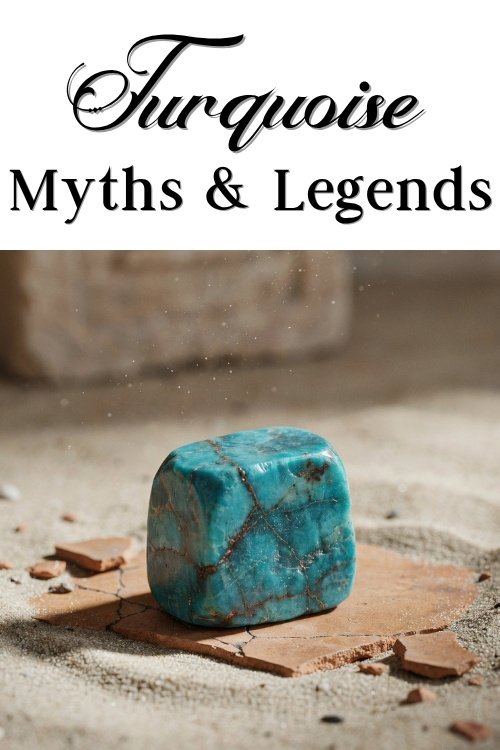
Turquoise has a distinctive blue-green colour, ranging from the palest sky to a deep robin’s egg blue, that has captured the imagination of cultures across the world for thousands of years. From the tombs of pharaohs to the ceremonial objects of Native American peoples, turquoise has been treated not merely as a decorative stone but as something far more significant.
Let’s explore some of the legends and cultural stories that surround this remarkable gemstone.
Ancient Egypt and Turquoise
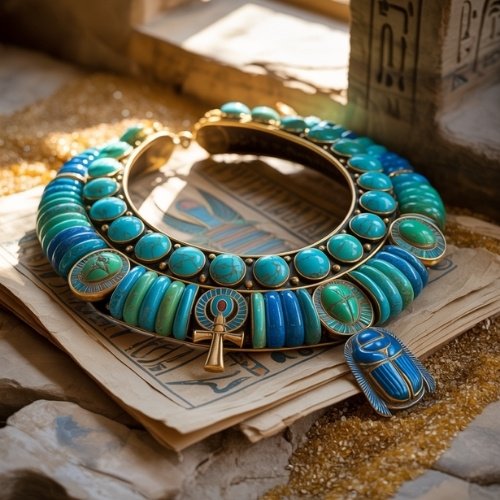
The ancient Egyptians were mining turquoise in the Sinai Peninsula from at least the Early Dynastic Period, around 3100 BC, making it one of the earliest gemstones to be mined. The mines at Serabit el-Khadim were among the most significant, and the Egyptians dedicated the site to Hathor, the goddess of beauty, love, and protection. She was sometimes referred to as Lady of Turquoise. She was also the goddess who greeted you into the afterlife.
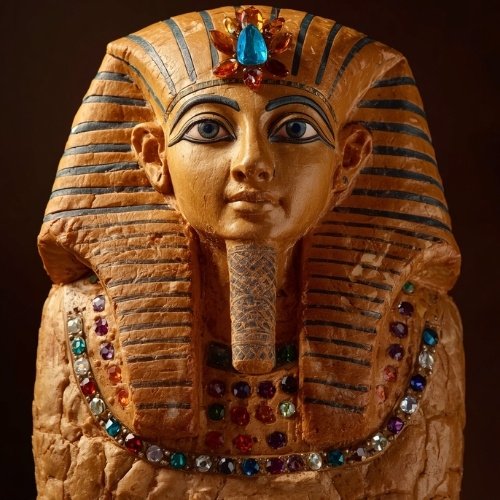
For the Egyptians, turquoise was associated with joy, protection, and the afterlife. It was used extensively in Egyptian jewellery and burial objects including the famous funerary mask of Tutankhamun which was inlaid with turquoise. Turquoise was believed to carry protective properties when worn or placed with the dead, helping to safeguard the wearer’s journey beyond this world.
🔗 Interested in discovering other gems the Ancient Egyptians used in there funeral practices? Read Gemstones in The Egyptian Book of The Dead
Ancient Persia and Turquoise
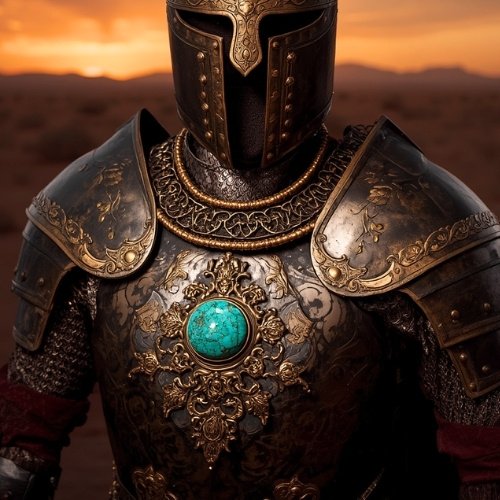
Persia, present day Iran, became one of the most celebrated sources of turquoise in the ancient world. The mines at Nishapur in the Khorasan region have been worked for over four thousand years and are still active today, producing some of the finest turquoise ever recorded.
In Persian culture, turquoise was closely associated with the sky and with divine protection. It was commonly worn by warriors and soldiers who believed the stone would protect them in battle. There was also a widely held belief that turquoise could predict danger or illness by changing colour, warning the wearer when something was wrong.
The Aztec and Maya and Turquoise
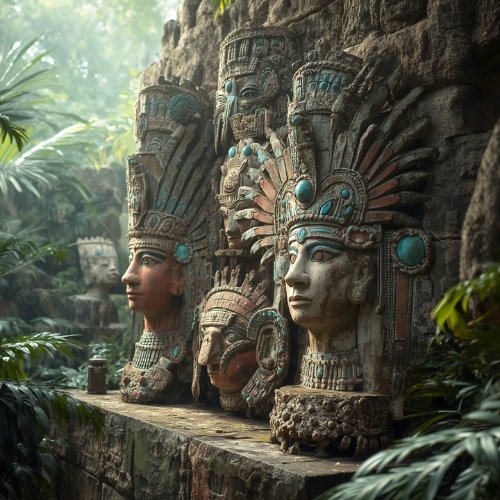
In Mesoamerica, turquoise held a place of extraordinary importance. Among the Aztec peoples, turquoise was called chalchihuitl and was considered one of the most sacred materials available. It was reserved for the highest religious and ceremonial purposes, used to decorate the masks, shields, and headdresses of gods and rulers.
Some of the most remarkable objects to survive from this period are Aztec mosaic pieces, objects covered in tiny pieces of turquoise carefully arranged to create intricate designs. The famous turquoise serpent now held in the British Museum is one such example, a double-headed serpent covered in turquoise mosaic, believed to have been used on ceremonial occasions by a person of high status.
The Maya also used turquoise in burial contexts and sacred offerings, treating it as a material connected with rain, abundance, and the favour of the gods.
Native American Traditions and Turquoise
Across many indigenous cultures of North America, turquoise has been a central material in spiritual and ceremonial life for thousands of years.
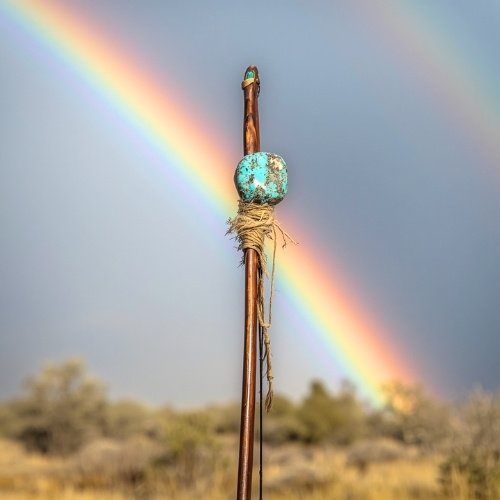
The Apache believed that turquoise could be found at the end of a rainbow, and attaching a piece of the stone to a bow or firearm was said to improve accuracy. Among the Zuni people, turquoise is associated with the sky and water and plays a role in ceremonial objects and prayers connected with rain and fertility. And the Ancestral Puebloans, whose settlements include the remarkable ruins at Chaco Canyon in New Mexico, traded turquoise across vast distances and incorporated it into offerings, burials, and ceremonial objects.
The Navajo People
As for the Navajo people, turquoise is directly tied to their creation stories and sits at the heart of their understanding of the world. The Navajo creation story, known as the Emergence, tells of the people travelling through a series of underworlds before emerging into this one. In that story, First Man placed four sacred stones (turquoise, white shell, jet, and abalone) at the four cardinal directions, with turquoise representing the south and the sacred mountain of Mount Taylor in New Mexico. These four stones became the foundations of the Navajo homeland and continue to carry deep significance in Navajo ceremony and art today.
Turquoise is also connected to one of the most important figures in Navajo belief, Changing Woman, sometimes called Turquoise Woman. In some versions of the creation story she first appeared to the people as a figure made of turquoise itself. She is associated with the cycles of nature, with protection, and with the continuity of life, and is considered one of the most sacred presences in the Navajo world.
Tibet and Turquoise
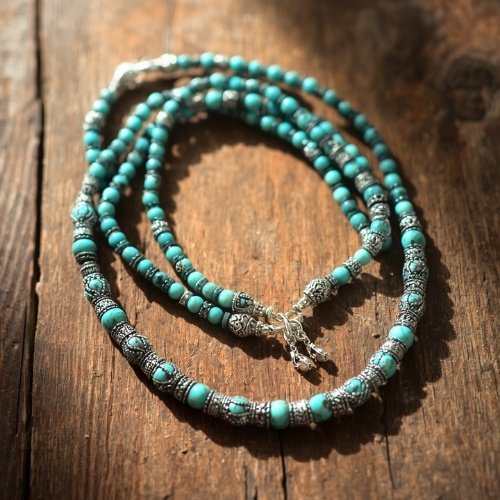
In Tibet, turquoise has long been considered a stone of health and spiritual protection. It has traditionally been worn in large quantities as jewellery, and there is a deeply rooted belief that the stone responds to the health of the person wearing it, growing paler or changing colour as the wearer sickens, and returning to its full colour when it passes to a healthy new owner.
A Stone as Old as Civilisation
What makes turquoise remarkable is the consistency of its significance across cultures that had no contact with one another. Its colour, its rarity, and something less easily defined seem to have spoken to human beings in very similar ways, whether they were building pyramids, decorating ceremonial masks, or setting the turquoise tiles of a Persian mosque.
Even today, long after the myths have faded, turquoise carries an unmistakable presence. It still feels like a stone that belongs to the sky and to the earth in equal measure.
🔗These legends often influence how we view turquoise today. For a deep dive into the crystal healing beliefs of turquoise read The Symbolic & Spiritual Meanings of Turquoise
Quick side note – these turquoise myths and legends make great marketing content, so feel free to retell them to your audience!
🔗 Want some guidance on using gemstone knowledge to market your jewellery business? Read Using Gemstone Knowledge to Boost Your Jewellery Sales
🔗 Working with turquoise in your jewellery making? Take a look at my Jeweller’s Guide to Turquoise
📌 Don’t forget to save these turquoise myths and legends so you can easily find them again.