Estimated reading time: 5 minutes
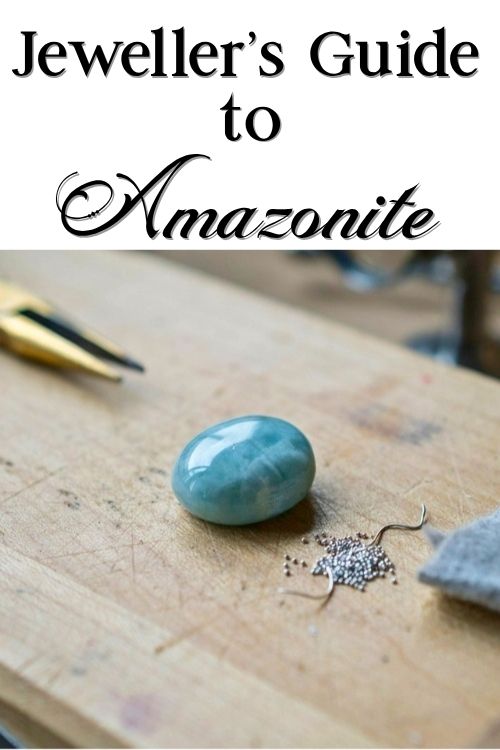
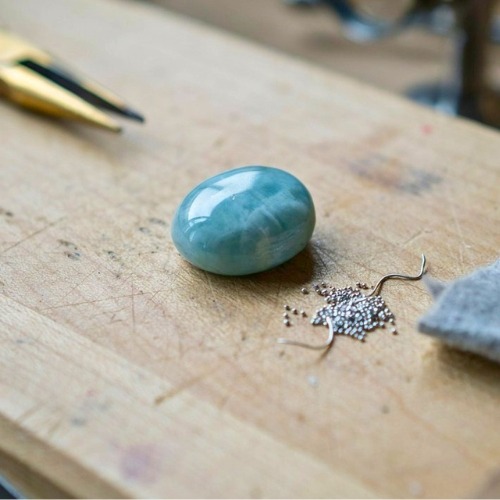
Amazonite has a colour that stops people in their tracks. That cool, blue-green hue, often with faint white streaking running through it, gives the stone a calm, almost oceanic quality that’s hard to look away from. It’s a favourite for anyone drawn to soft, soothing colour in their jewellery.
Jump to:
Basic Identification Information
Name and Synonyms
Amazonite
Sometimes misleadingly sold as Amazon Jade
Species
Microcline (a variety of feldspar)
Colour Range
Blue-green to green, often with whitish or cream streaking
Refractive Index
1.518 – 1.534
Birefringence
0.008
Optical Sign
Biaxial (-)
Pleochroism
None
Specific Gravity
2.54 to 2.58
Fluorescence
SWUV: Inert.
LWUV: Inert or weak green glow.
Lustre
Vitreous to greasy
Clarity / Transparency
Semitranslucent to opaque
Gems Often Mistaken For
Jade (both jadeite and nephrite), Turquoise, Aventurine, Chalcedony
Mohs Hardness
6 – 6.5
Wearability
Fair, largely due to the stone’s cleavage
Birthstone
Amazonite has no traditional birthstone assignment
Anniversary
No traditional anniversary association
🔗 Want to know how the information above is used to identify a gemstones? Read Gemstone Identification: How I Actually Test Gemstones
Spotting Simulants and Imitations
There’s no lab-grown amazonite on the market, so this isn’t really a case of spotting synthetics.
The more common issue is mislabelling, where amazonite gets sold under the name of a pricier lookalike such as jade, usually down to someone identifying the stone by its appearance alone rather than testing it properly. Since amazonite is relatively inexpensive compared to gems like jade, there’s little real commercial incentive to deliberately imitate it, but plenty of reason for a seller to (knowingly or not) call it something grander than it is.
Common Treatments
Amazonite is one of the more lightly treated gemstones on the market. Because its colour is stable and considered attractive as found, there’s little commercial incentive to alter it, though a few treatments do occasionally turn up.
Waxing and Oiling
As with many opaque and translucent gemstones, waxing is sometimes used to enhance lustre and give the surface a slightly richer, wetter look. This is a widely accepted practice and considered minor by trade standards, though like any surface treatment it isn’t permanent and will wear away over time.
Dyeing
Dyeing is occasionally seen on paler or unevenly coloured material to intensify or even out the green-blue hue. It’s less common than with more porous gemstones, since amazonite’s compact structure doesn’t take dye as readily, but it’s worth checking for on inexpensive or unusually vivid pieces.
Resin Impregnation
Because amazonite has cleavage, lower-grade rough sometimes contains small internal fractures. Occasionally these are filled with clear resin to improve transparency and durability before cutting. This isn’t a widespread practice, but it does happen sometimes, and any resin filling should always be disclosed.
Durability and Setting Considerations
Amazonite is most often cut as a cabochon or bead.
The main durability consideration with amazonite is its cleavage. As a feldspar, it has two directions of good to perfect cleavage meeting at close to a right angle, which means the stone is genuinely prone to splitting along these planes if knocked or placed under pressure. This is worth bearing in mind both when setting the stone and when advising clients on wear.
Bezel settings are a sensible choice, as they protect the girdle and reduce the risk of a sharp knock catching an edge. I’d steer clients away from amazonite rings intended for daily wear, particularly manual work, and suggest earrings, pendants, and brooches instead, where the stone is less exposed to impact.
Care Instructions
Cleaning
Warm soapy water and a soft brush are the safest way to clean amazonite. Steam and ultrasonic cleaners should be avoided, as both the heat and the vibration can damage the stone.
Storage
Store amazonite separately from harder gemstones such as sapphire, ruby, or diamond to prevent surface scratches. A soft pouch or lined jewellery box is ideal.
Daily Wear
Sudden knocks are the biggest risk to amazonite, so it’s worth advising clients to remove amazonite jewellery before sports, manual work, or anything involving a risk of impact. It’s also sensible to avoid prolonged exposure to strong sunlight, which can cause some feldspars to fade slightly over time.
Market and Ethical Notes
Amazonite’s historic mines were located in the Ilmen Mountains in Russia, though today it’s also sourced from Colorado in the USA (notably around Pikes Peak), Madagascar, Brazil, India, and Namibia. Colorado material is particularly prized for its vivid blue-green tone.
Value is driven mainly by colour saturation and evenness. The most desirable stones show a strong, even blue-green with minimal white streaking, while heavily streaked or pale material is worth considerably less.
Because amazonite is relatively abundant and inexpensive compared to many coloured gemstones, ethical concerns tend to centre less on scarcity and more on standard responsible sourcing practice, though as ever it pays to buy from suppliers who can speak knowledgeably about origin.
Symbolic and Spiritual Meanings
Amazonite is often referred to as the Stone of Courage or the Stone of Hope, and is associated with truth, clear communication, and emotional balance. It’s frequently linked to the throat chakra, said to encourage honest self-expression, and is considered a calming, soothing stone for those prone to anxiety or overthinking.
🔗 Dive deeper into Amazonite’s Symbolic and Spiritual Meanings (coming soon)
Etymology
Amazonite takes its name from the Amazon River, though somewhat confusingly, no significant deposits have ever been found in the Amazon region. The name is thought to stem from early confusion with a type of green stone used by Indigenous peoples along the river, which was possibly a form of jade, rather than the feldspar amazonite we know today.
🔗 Curious about amazonites history? Explore its fascinating myths and legends (coming soon)
🛍️ Looking for sustainable gemstones for your next jewellery creation? Check out our selection of pre-owned gems
📌 Save this jeweller’s guide to amazonite for quick reference next time you are working with this beautiful and soothing stone.