When you start learning about gemstones, you may come across guides that describe certain gem species as Type I, Type II, or Type III. This is not a quirk of the guide, it is a reflection of something called gem clarity types, a classification system developed by the Gemological Institute of America, or GIA. The system helps buyers and gem enthusiasts understand whether a gemstone with inclusions is a lower quality example of its species, or whether inclusions are simply to be expected in that particular gem type.
What Are Gem Clarity Types?
Gem clarity types are a framework developed by the GIA to group coloured gemstones (and some other gem materials) according to how they typically form in nature, and therefore what level of clarity you can realistically expect to find in each one.
Diamonds have their own detailed clarity grading scale ranging from flawless down to included, and buyers expect a fine diamond to be eye clean as a baseline. But coloured stones are a different story. Some gem species routinely grow in conditions that leave them full of inclusions, fractures, or other internal characteristics. Holding an emerald to diamond’s standards would mean almost every emerald on the market would grade poorly, which doesn’t reflect the gem’s actual value or beauty.
So rather than applying one universal standard, the GIA created three clarity types. Each type reflects what is considered normal and acceptable for stones in that group, making it easier to communicate a gem’s quality in a way that’s fair and meaningful for each species.
Type I: Eye Clean in Nature
Type I gems are those that typically form with very few or no inclusions, to the point where a good quality specimen is expected to be clean to the naked eye. Finding inclusions in a Type I stone is unusual enough that it tends to affect its value.
Examples of Type I gemstones:
- Aquamarine
- Chrysoberyl
- Citrine
- Goshenite
- Kunzite
- Smoky quartz
- Tanzanite
- Topaz
- Morganite
- Veredelite (Green Tourmaline)
Type II: Inclusions Are Normal
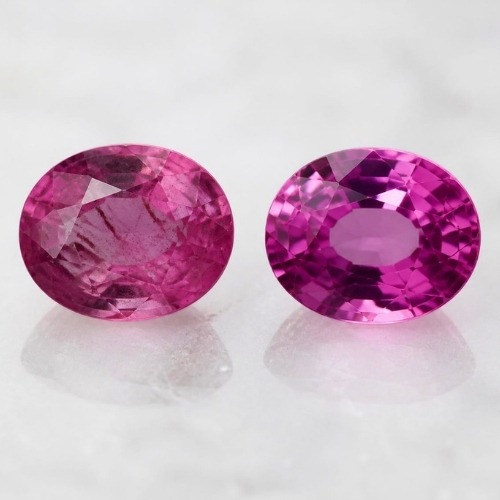
This is the largest group, covering many of the most beloved coloured gemstones. For Type II stones, the presence of inclusions does not automatically signal a low-quality stone. Inclusions are part of the gem’s character, and the question is more about what type of inclusions are present, where they sit, and whether they affect the stone’s beauty or durability. That said, it’s also fairly common to find eye clean examples of these stones, although they generally demand a slight premium.
Examples of Type II gemstones:
- Alexandrite
- Amethyst
- Ametrine
- Garnet
- Iolite
- Peridot
- Ruby
- Sapphire
- Spinel
Type III: Almost Always Included
Type III gems are those that nearly always contain inclusions. This does not mean Type III gems are low quality. On the contrary, they tend to be quite an expensive category. For these gems, clarity is assessed relative to other Type III stones, and their inclusions are considered part of the stone’s beauty rather than an imperfection to avoid. Finding an eye clean Type III stone is possible, but it’s also genuinely rare, and you’d expect to pay a heavy premium for it.
Examples of Type III gemstones:
- Emerald
- Rubellite (red tourmaline)
- Siberite (purple-red tourmaline)
What About Translucent and Opaque Gems?
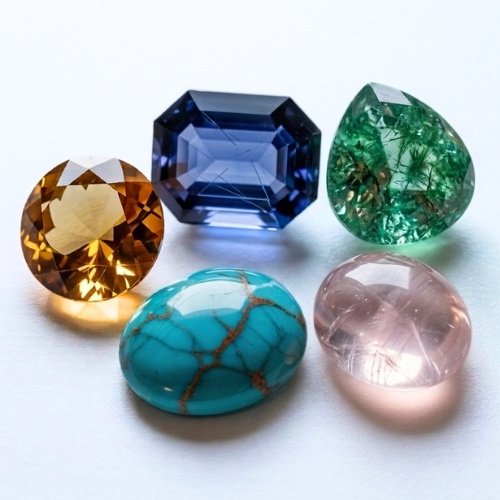
The GIA clarity type system is designed for transparent to near-transparent gems, where inclusions and their visibility matter to the overall appearance. But not all gems are transparent. Some are translucent, and others are opaque.
For these gems, clarity in the traditional sense is largely irrelevant. Internal inclusions are either invisible or simply do not affect how the stone looks in the same way, so a different descriptive language applies.
Translucent Gems
A translucent gem allows light to pass through but scatters it, so you cannot see clearly through the stone. The appeal of these gems lies in their soft glow, colour saturation, and surface phenomena rather than clarity.
Examples of translucent gemstones:
- Chalcedony
- Chrysoprase
- Fluorite
- Moonstone
- Prehnite
- Rose quartz
Opaque Gems
Opaque gems allow no light through at all. They are valued entirely for their colour, surface lustre, patterns, and any optical phenomena (such as chatoyancy or asterism) that appear at the surface.
Examples of opaque gemstones:
- Chrysocolla
- Hematite
- Jasper
- Jet
- Lapis lazuli
- Malachite
- Onyx
- Pyrite
- Tiger’s eye
- Turquoise
Why Does This Matter When You Are Buying Gems?
Understanding clarity types helps you shop with more confidence and more realistic expectations. If you are buying a fine emerald and it has inclusions, that is completely normal — provided the inclusions do not threaten the stone’s durability or sit in a position that badly disrupts its colour. If you are buying aquamarine and it has visible inclusions, that is worth querying, because aquamarine should typically be eye clean.
It also helps you understand pricing. A lightly included spinel might be described as a clean stone for its type and priced accordingly. The same level of inclusion in a tanzanite would be considered below standard.
Gem clarity types are one of those pieces of gemological context that, once you know them, make the whole world of coloured stones feel a lot less confusing.
Interested in exploring other gemstone terms and what they mean? Try:
🔗 Gemstone Optical Phenomena Explained: What You Need to Know
🔗 What is gemstone cleavage, and why does it matter?
🔗 What is the Mohs Hardness Scale? And why does it matter?
📌 Don’t forget to save this gemstone clarity guide so you can find it again!