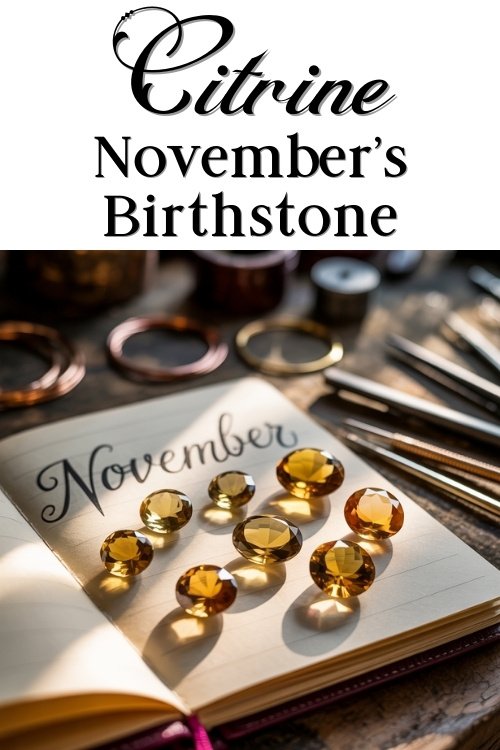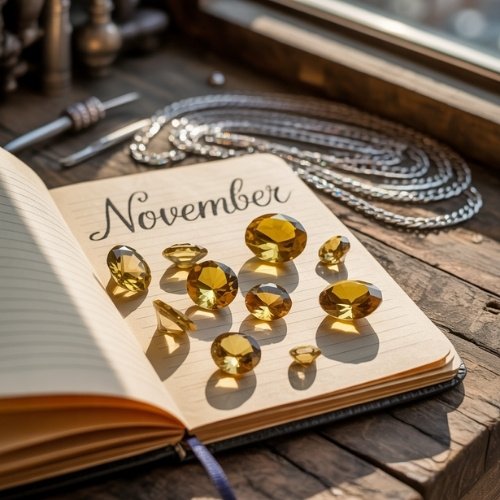
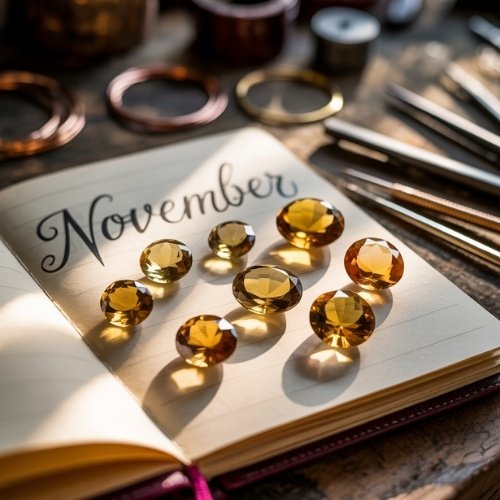
November is one of the coziest months on the calendar, all crisp air, golden light, and the last warmth before winter properly settles in. Its birthstone suits it perfectly.
Topaz may be November’s original stone, but citrine more than holds its own as a companion gem, a stone of warmth, optimism, and solar energy with a colour range that mirrors the season itself, from the palest lemon yellow to a rich, burnished amber. For a month defined by golden light and the slow fade into winter, it’s a fitting choice.
Why Citrine is November’s Birthstone
Citrine was officially recognised as a November birthstone by the American National Association of Jewelers in 1952, joining topaz, which had held the spot alone for forty years.
The practical case for adding citrine is straightforward. It offers a more accessible alternative to the rarer golden topaz without losing any of the autumnal colour drama. But as a gemologist, I can’t help wondering if there was another motivation too. These two gems are so frequently confused for one another that without proper testing they can look virtually identical, and historically citrine has even been sold under trade names like topaz quartz and Madeira topaz. Giving citrine its own official birthstone status may well have helped bring some much needed clarity to the market.
🔗 Curious about how to tell these gems apart? Read my full comparison guide to Citrine vs Topaz
🔗 Explore the History of Birthstones to learn more about this timeless tradition
History and Lore of Citrine
Citrine has been used as a gemstone for a very long time. The ancient Egyptians are thought to have used yellow quartz as a talisman, and ancient Greek and Roman craftspeople carved it into intaglios and set it into jewellery and rings. Queen Victoria was reportedly fond of citrine, and a number of brooches and pendants from her era survive today featuring the stone.
In Scotland, citrine found a particularly enthusiastic home. The Scots used it decoratively in kilt pins, brooches, and the handles of sgian-dubh, the traditional short blade worn in the stocking. The stone’s warm golden tones complemented the tartans and silver metalwork of Highland dress particularly well, and this tradition helped establish citrine as a gem with real cultural significance in Britain.
In South America, where much of the world’s citrine supply has historically originated, the stone held significance in indigenous traditions as a gift from the sun, associated with warmth, life, and abundance.
🔗 Dive deeper into Citrine Myths and Legends
Citrine’s Meaning, Symbolism, and Energy
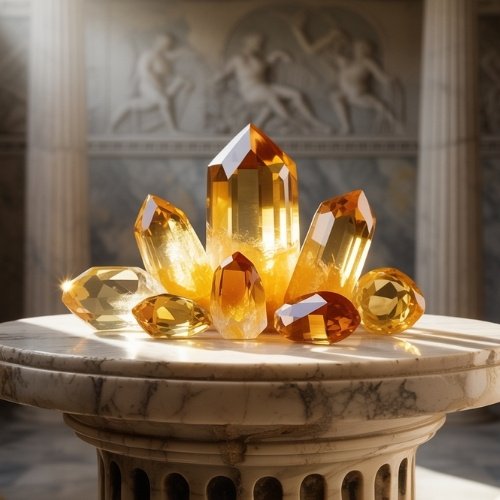
Citrine is most widely associated with positivity, abundance, and energy. It earned the nickname the Merchant’s Stone in crystal traditions due to the belief that it attracted prosperity and good fortune, and was best kept close to the till or at the point of sale.
More broadly, citrine is thought of as one of the more energising stones. Where other gems carry heavier or more complex symbolism, citrine tends toward the uplifting. It’s associated with confidence, creativity, and the solar plexus chakra, the energetic centre linked to personal power and self-expression.
For a November stone, that warmth and brightness feels like a deliberate counterbalance to the season. The days are getting shorter and the light thinner, and citrine carries a memory of the sunny months with it.
🔗 Discover the Symbolic and Spiritual Meanings of Citrine
Shades, Varieties, and Buying Tips
Citrine’s colour range spans from very pale, almost watery lemon yellow through golden amber to a deep, reddish-brown orange. Understanding how those colours are produced is actually one of the more interesting things about this gem, and it’s useful knowledge for any jeweller sourcing stones.
Natural citrine is rarer than the market suggests. The conditions required for quartz to develop a naturally yellow colour are fairly specific, and genuinely untreated natural citrine tends to be a pale to mid-toned yellow, often with a slightly smoky quality. The bold oranges and deep ambers that fill the citrine sections of most gem suppliers are almost always heat-treated amethyst or smoky quartz, a process that transforms their colour through controlled heating and is widely accepted in the gem trade, provided it’s disclosed. It’s worth being aware of this when sourcing and describing your stones to customers.
The most prized colour in the trade goes by the name Madeira citrine, named after Madeira wine for its deep, reddish-amber to orange-brown colour and the red flashes it shows in strong light. This colour is produced by heat-treating amethyst with a particular iron content, and it commands higher prices because the depth of colour and warmth it carries is genuinely beautiful and relatively rare to achieve well.
Madeira citrine isn’t the only colour grades worth knowing. Here are a couple more:
- Lemon citrine sits at the pale, cool yellow end of the spectrum, with little to no orange component. A clean, modern choice that works beautifully in minimalist settings.
- Golden citrine is the classic mid-range variety, a warm medium yellow with enough orange to give it depth without tipping into amber. The most widely available and versatile shade.
When buying citrine, colour saturation and evenness are the main quality factors, alongside clarity. It’s also quiet common to see colour zoning within citrine, which can add a unique character to the stone when it’s cut with that zoning in mind.
One thing worth knowing when designing a citrine piece is that heat-treated citrine can be sensitive to strong direct sunlight, when exposed over long periods, which can gradually fade the stones colour.
🔗 Looking for some tips about working with citrine? Have a read of my Jewellers Guide to Citrine
Fun Facts About Citrine
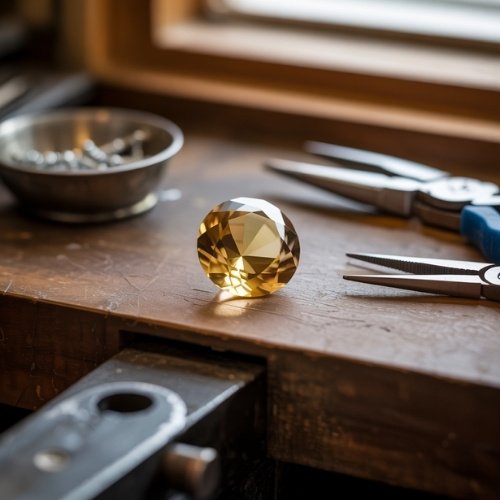
- The largest known faceted citrine is called the Malaga citrine, weighing an extraordinary 20,200 carats. It was found in Minas Gerais, Brazil in 1990 and sat uncut for nearly two decades before being faceted in 2009.
- Citrine became particularly fashionable during the Art Deco period of the 1920s and 1930s, when its warm golden tones suited the bold geometric designs of the era perfectly. Large statement citrine pieces were a favourite of Hollywood actresses of the time.
- In the centuries before modern gemology, virtually all golden yellow stones were grouped together under the name topaz regardless of their actual mineral identity. Citrine, yellow sapphire, and yellow tourmaline were all regularly sold as topaz, which is partly the reason why citrine was historically traded under names like topaz quartz and Madeira topaz.
Alternatives for November’s Birthstone
Topaz is November’s other official birthstone, and the two gems make an interesting pair. Yellow topaz in its finest form is a richer, more saturated stone than citrine, and carries significantly more value, but both share that warm autumnal palette. Imperial topaz, the golden-orange variety, is particularly beautiful and increasingly sought after.
For those drawn to something a little different, yellow sapphire offers a more durable and precious alternative for November babies who want a yellow stone with a bit more rarity behind it.
Citrine’s Enduring Place in November Birthstone Lore
Citrine is a gem that repays a little extra knowledge. Understanding what you’re looking at when you source it, how the colour was produced, and what genuinely natural citrine looks like compared to its treated counterpart, makes it a more interesting stone to work with, not a less appealing one.
For jewellers, it’s an extraordinarily practical gem. Large sizes are readily available, it works in any metal tone, and its warm palette plays beautifully with everything from bright enamels to simple clean metalwork. For November, a month that asks a lot of us in terms of finding warmth and light, citrine feels like a generous answer.
🛍️ Interested in using pre-owned citrine in your next design? View our current Citrine selection
📌 Save this post so you can revisit Citrine, November’s Birthstone, whenever you need inspiration.