Estimated reading time: 5 minutes
Ancient Egypt was a land of myths, symbols, and rituals, and at the heart of it all was Osiris, the god of the afterlife, fertility, and resurrection. His story is one of betrayal, loss, and miraculous rebirth, and it inspired some of the most fascinating ceremonies of the ancient world.
One of those rituals involved baking bread shaped like Osiris and adorning it with precious gemstones. Yes, gem-encrusted bread. It sounds extraordinary, but it gives us a wonderful glimpse into the beliefs, creativity, and spiritual life of the ancient Egyptians.
Jump to:
The Myth Behind the Ritual
Osiris was a wise and beloved ruler, but his power made him a target. His brother Set, consumed by envy, hatched a cruel and calculated plan. He threw a lavish party in Osiris’s honour, and at the height of the festivities he unveiled a magnificent chest, announcing that whoever fit inside it perfectly could keep it as a gift. What none of the guests knew was that Set had secretly taken Osiris’s measurements beforehand and that the chest was actually a coffin built specifically for him. When Osiris climbed in and it fit perfectly, Set slammed the lid shut, nailed it closed, and threw it into the Nile.
Isis, Osiris’s devoted wife, refused to accept his fate. She searched tirelessly until she finally recovered the coffin, but Set was not finished. Upon discovering what Isis had done, he seized Osiris’s body, dismembered it, and scattered the pieces across the length of Egypt, in a final act of cruelty designed to make restoration impossible.
But he had underestimated Isis and her love for her husband. Through her extraordinary magic, she recovered every fragment and pieced her husband back together and revived him. Transforming an act of utter destruction into one of the most powerful stories of renewal the ancient world has ever told. From that moment, Osiris became the ultimate symbol of resurrection and eternal life.
The Divine Bread
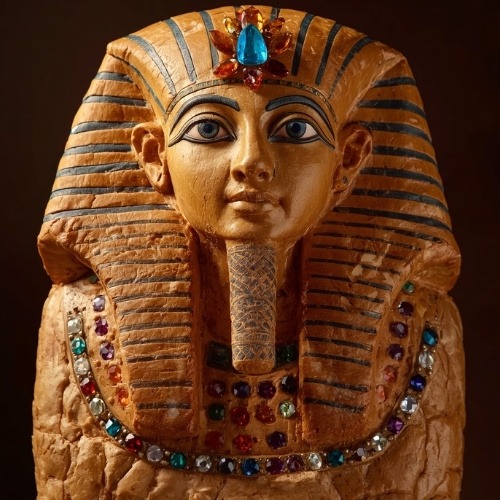
The ritual of Osiris-shaped bread grew directly from that legend. These sacred loaves, sometimes called Divine Bread, were not baked simply to honour the god. They were meant to symbolically participate in his resurrection. By creating and consuming the bread, participants felt connected to his promise of immortality and protection.
Making Osiris bread was no casual affair. Artisans mixed grain with a paste that carried deep symbolic weight, including Nile silt, dates, frankincense, myrrh, and a range of mystical spices. But the most striking addition of all was gemstones. Each loaf was decorated with carefully chosen precious stones, selected for their spiritual associations and their connection to Osiris.
I must admit I find the idea of eating bread made using Nile silt a little off putting, but my main concern would be the gemstones. I really hope they didn’t eat them too, as that couldn’t have been good for them!
The Gemstones and Their Meanings
Historical records and artefacts show that the loaves were adorned with a thoughtfully chosen selection of stones.
- Carnelian – A lively red stone, thought to bring vitality and protection.
- Lapis Lazuli – Its deep blue evoked the heavens and divine wisdom, guarding the soul in the afterlife.
- Turquoise – Associated with prosperity and protection, believed to ward off negative energies.
- Green Feldspar – A symbol of growth and fertility, echoing Osiris’s connection to vegetation and natural cycles.
- Amethyst – Revered for its calming energy and protective qualities, reflecting the tranquillity of the afterlife.
- Red Quartz – Possibly linked to strength and life force, though records aren’t clear on this one.
- Red Jasper – Likely associated with vitality and protection, thanks to its earthy red tones.
- Calcite – Its luminous quality may have symbolised clarity, purity, or divine light.
Gold, silver, and other precious materials were also included, adding further spiritual weight to the ritual.
Why Gemstones?
In ancient Egypt, gemstones were never just decorative. Each stone was believed to protect, heal, or strengthen the wearer’s connection to the divine. For the Osiris ritual specifically, the gemstones may have represented the scattered pieces of his body and their eventual restoration, a beautiful metaphor for life triumphing over death.
The Ritual’s Legacy
This practice endured for centuries, forming a central part of the Mysteries of Osiris, an annual festival celebrating his resurrection. Eating the bread was more than a ritual meal. It was a way of absorbing a little of Osiris’s divine essence, securing a bond with his power and his promise of eternal life.
Over time, many of these rituals faded, particularly with the rise of Christianity in Egypt. But echoes of those ancient practices are still visible today in symbolic rites such as the Christian Eucharist.
A Gem-Encrusted Mystery
The story of Osiris and his gem-adorned bread is a reminder of just how deeply the ancient Egyptians felt connected to the natural and divine worlds. Beauty and meaning were never separate things to them. Gemstones were not decorative, they were powerful, symbolic, and sacred, and that sense of meaning has never really left them. Whether you are drawn to a stone for its colour, its sparkle, or its history, gems have always been woven into humanity’s spiritual and creative journey.
So next time you hold a carnelian or a piece of lapis lazuli, think of those ancient hands decorating sacred loaves, and the story of a god painstakingly put back together by his devoted wife. The connection between people and gemstones stretches back thousands of years, and the Bread of Osiris is vivid, unusual, and genuinely fascinating. I’m sure it’s a story your own customers will love to hear too, so feel free to retell it to your audience!
🔗 Want some guidance on using gemstone knowledge to market your jewellery business? Read Using Gemstone Knowledge to Boost Your Jewellery Sales
🔗 Want to discover more about the Ancient Egyptians’ use of gemstones? Read Gemstones in the Book of the Dead
📌 Save this historical story about The Bread of Osiris so you can easily find it again.